
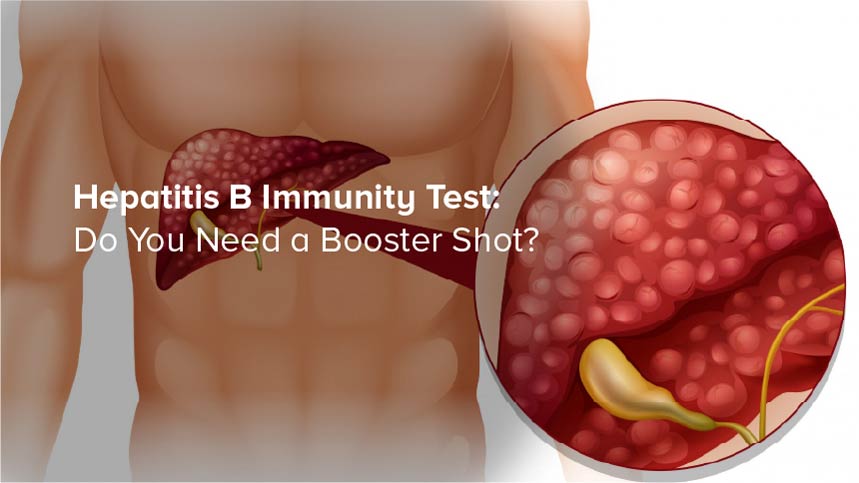


Hepatitis B is a serious liver infection caused by the hepatitis B virus (HBV). Although vaccination is highly effective, immunity may decline over time in some individuals. A hepatitis B immunity test helps determine whether you still have adequate protection, especially if you belong to a high-risk group such as healthcare workers or immunocompromised individuals.
What Is a Hepatitis B Immunity Test?
A hepatitis B immunity test measures the level of hepatitis B surface antibodies (anti-HBs) in your blood. These antibodies develop after vaccination or recovery from past infection. The results indicate whether you are protected from the virus.
Test results are usually reported in milli-international units per milliliter (mIU/mL):
Additional tests—such as HBsAg and anti-HBc—may be ordered to determine current or past infection.
Who Should Get Tested for Hepatitis B Immunity?
Healthcare Workers and First Responders
Constant exposure to blood and body fluids makes regular immunity testing essential.
Individuals with Chronic Health Conditions
People with diabetes, kidney disease, or weakened immune systems may have a reduced vaccine response, making monitoring necessary.
International Travelers
Travelers visiting regions with high hepatitis B prevalence should verify their immunity before departure.
Household Contacts of Infected Individuals
People living with someone who has chronic HBV should confirm their immunity to reduce transmission risk.
Infants Born to Infected Mothers
Babies receive hepatitis B vaccination at birth; follow-up testing at 9–12 months ensures successful protection.
Understanding Your Test Results
When Do You Need a Booster Shot?
Initial Vaccine Response
About 5–10% of adults do not develop adequate immunity after the initial series and may need further doses.
Time Since Vaccination
Immunity generally lasts for decades, but some people experience declining antibody levels over time.
Occupational or Lifestyle Risk
Healthcare workers and high-risk individuals may need boosters if their antibody levels drop below protective thresholds.
Immunocompromised Individuals
People with weakened immune systems may require more frequent boosters to maintain long-term protection.
Key Points to Remember
Conclusion
AMPATH Labs offers accurate and reliable hepatitis B immunity testing, ensuring clarity about your protection level. Our expert team provides precise results to help you decide whether a booster shot is needed. Schedule your hepatitis B immunity test today and safeguard your long-term health.
Hepatitis B is a serious liver infection caused by the hepatitis B virus (HBV). Although vaccination is highly effective, immunity may decline over time in some individuals. A hepatitis B immunity test helps determine whether you still have adequate protection, especially if you belong to a high-risk group such as healthcare workers or immunocompromised individuals.
What Is a Hepatitis B Immunity Test?
A hepatitis B immunity test measures the level of hepatitis B surface antibodies (anti-HBs) in your blood. These antibodies develop after vaccination or recovery from past infection. The results indicate whether you are protected from the virus.
Test results are usually reported in milli-international units per milliliter (mIU/mL):
Additional tests—such as HBsAg and anti-HBc—may be ordered to determine current or past infection.
Who Should Get Tested for Hepatitis B Immunity?
Healthcare Workers and First Responders
Constant exposure to blood and body fluids makes regular immunity testing essential.
Individuals with Chronic Health Conditions
People with diabetes, kidney disease, or weakened immune systems may have a reduced vaccine response, making monitoring necessary.
International Travelers
Travelers visiting regions with high hepatitis B prevalence should verify their immunity before departure.
Household Contacts of Infected Individuals
People living with someone who has chronic HBV should confirm their immunity to reduce transmission risk.
Infants Born to Infected Mothers
Babies receive hepatitis B vaccination at birth; follow-up testing at 9–12 months ensures successful protection.
Understanding Your Test Results
When Do You Need a Booster Shot?
Initial Vaccine Response
About 5–10% of adults do not develop adequate immunity after the initial series and may need further doses.
Time Since Vaccination
Immunity generally lasts for decades, but some people experience declining antibody levels over time.
Occupational or Lifestyle Risk
Healthcare workers and high-risk individuals may need boosters if their antibody levels drop below protective thresholds.
Immunocompromised Individuals
People with weakened immune systems may require more frequent boosters to maintain long-term protection.
Key Points to Remember
Conclusion
AMPATH Labs offers accurate and reliable hepatitis B immunity testing, ensuring clarity about your protection level. Our expert team provides precise results to help you decide whether a booster shot is needed. Schedule your hepatitis B immunity test today and safeguard your long-term health.
Food-related reactions are often lumped together under a single umbrella, but food...
17-09-2026
For decades, cholesterol testing has been the cornerstone of cardiovascular risk...
17-09-2026
Chronic fatigue syndrome (chronic fatigue syndrome), also known as myalgic encephalomyelitis...
17-09-2026
Book lab tests, access reports instantly, and get seamless home sample collection with advanced technology.
Trusted by millions, Ampath Labs ensures accurate diagnostics, convenience, and care at your fingertips.




 Select Location



 Get 15% OFF on 1st order above ₹100 Use code:



































































.jpg)