
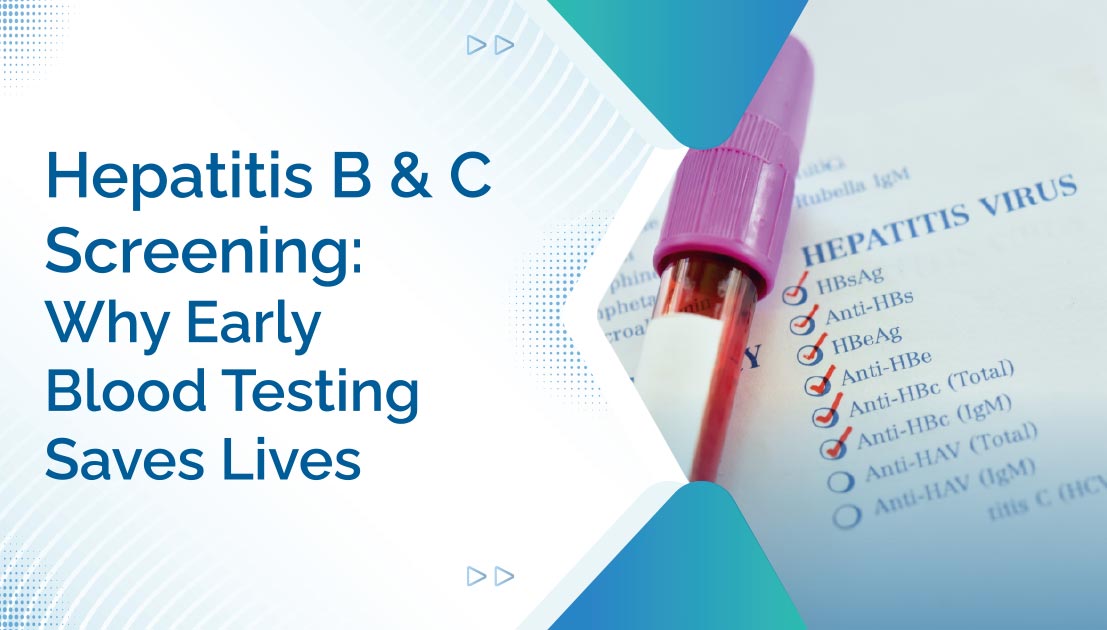


Hepatitis B and hepatitis C are viral infections that attack the liver, and both can silently cause serious damage over years or even decades before a person notices any symptoms. Because early-stage infection so often goes unnoticed, blood-based screening plays a central role in identifying these viruses before they progress to advanced liver disease, cirrhosis, or liver cancer.
Understanding Hepatitis B and C
Hepatitis B and hepatitis C are both viruses that primarily target the liver, causing inflammation that can lead to long-term scarring if left untreated. Hepatitis B spreads through contact with infected blood or bodily fluids, including through birth from an infected mother to child, while hepatitis C spreads primarily through blood-to-blood contact, most commonly through shared needles.
Both infections can become chronic, meaning the virus remains in the body long-term rather than clearing on its own. Chronic hepatitis B and C are the leading causes of liver cirrhosis and liver cancer worldwide, making early identification an important public health priority.
Why Symptoms Often Go Unnoticed
Many people with chronic hepatitis B or C experience no symptoms at all for years, or they may notice only mild, nonspecific issues such as fatigue or occasional abdominal discomfort that are easy to dismiss. By the time more obvious symptoms appear, including yellowing of the skin and eyes, dark urine, or abdominal swelling, significant liver damage may have already occurred.
This silent progression is precisely why screening, rather than waiting for symptoms, is considered the most effective strategy for catching these infections while treatment can still make the biggest difference.
Who Should Be Screened
Many health organizations now recommend at least one lifetime hepatitis C screening for all adults, alongside targeted screening for hepatitis B in higher-risk groups.
How the Screening Tests Work
Hepatitis B screening typically starts with a blood test looking for the hepatitis B surface antigen, which indicates active infection, along with antibody tests that can reveal past infection or immunity from vaccination. Additional tests may be used to determine whether an infection is acute or chronic.
Hepatitis C screening begins with an antibody test, which indicates whether a person has ever been exposed to the virus. If antibodies are detected, a follow-up test measuring the virus's genetic material, known as an RNA test, confirms whether the infection is still active, since some people clear the virus naturally without treatment.
Interpreting Your Results
A positive hepatitis B surface antigen result indicates active infection, which your doctor will further evaluate to determine whether it is acute or chronic, along with assessing liver function through additional blood tests. A positive hepatitis C antibody test with a confirmed positive RNA test indicates a current, active infection requiring further evaluation and treatment planning.
It is worth understanding that a positive hepatitis C antibody test alone does not confirm active infection, since the antibody remains detectable even after the virus has been cleared, either naturally or through successful treatment. This is why the follow-up RNA test is such an important step.
Treatment Advances Worth Knowing About
Treatment for hepatitis C has advanced dramatically in recent years, with direct-acting antiviral medications now able to cure the infection in the vast majority of patients over a course of just eight to twelve weeks, with minimal side effects compared to older treatment regimens.
Hepatitis B, while not currently curable in the same way, can often be effectively managed with antiviral medications that suppress the virus and significantly reduce the risk of liver damage over time. Vaccination remains a highly effective way to prevent hepatitis B infection altogether, and it is recommended as part of routine childhood immunization in many countries.
Why Early Screening Saves Lives
Identifying hepatitis B or C before significant liver damage occurs allows treatment to begin while the liver still has a strong capacity to recover. For hepatitis C, this often means the difference between a straightforward cure and a much more complicated course involving cirrhosis or liver cancer.
Early diagnosis also allows people to take steps to protect their liver health more broadly, including limiting alcohol intake, avoiding certain medications that stress the liver, and getting vaccinated against other forms of hepatitis, if not already immune.
Conclusion
Hepatitis B and C often progress quietly, without symptoms, making blood- based screening one of the most powerful tools available for protecting long-term liver health. With effective treatments now available, particularly for hepatitis C, early detection through routine screening can genuinely change the course of a person's health for the better. If you fall into any higher-risk category, or simply have not been screened before, talking to your doctor about testing is a straightforward and worthwhile step to take.

Food-related reactions are often lumped together under a single umbrella, but food...
17-09-2026

For decades, cholesterol testing has been the cornerstone of cardiovascular risk...
17-09-2026

Chronic fatigue syndrome (chronic fatigue syndrome), also known as myalgic encephalomyelitis...
17-09-2026
Book lab tests, access reports instantly, and get seamless home sample collection with advanced technology.
Trusted by millions, Ampath Labs ensures accurate diagnostics, convenience, and care at your fingertips.




 Select Location



 Get 15% OFF on 1st order above ₹100 Use code:



































































.jpg)