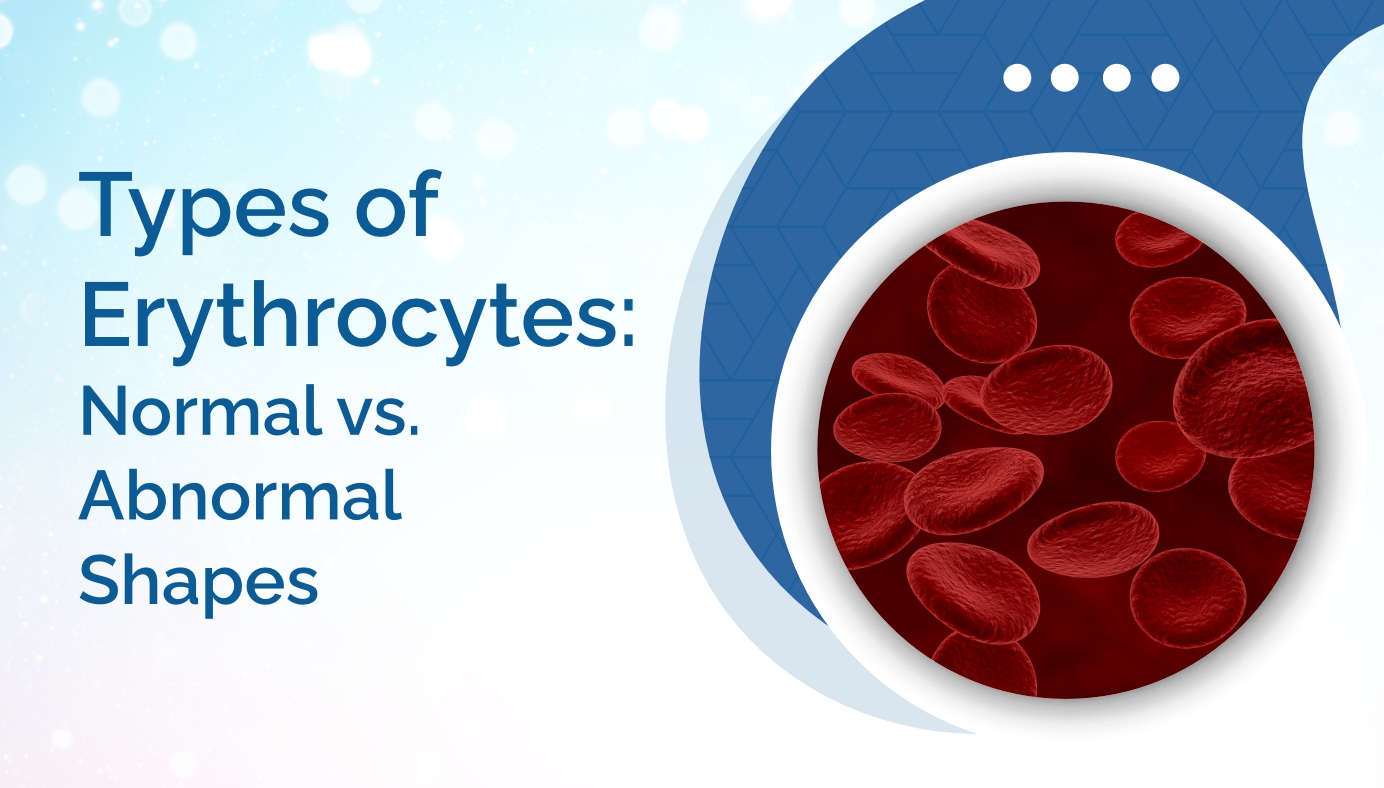


The human body relies on a complex network of blood vessels to transport oxygen to tissues and remove carbon dioxide. At the center of this vital process are erythrocytes, commonly known as red blood cells (RBCs). These microscopic cells are the most abundant cell type in the blood, and their efficiency is largely determined by their shape and structure.
While a routine blood count provides numerical values, the actual shape of red blood cells, known as morphology, offers deeper insight into a patient’s health. For pathologists and medical professionals, examining erythrocyte shape under a microscope is a crucial diagnostic step. Abnormal shapes can signal conditions ranging from nutritional deficiencies to inherited blood disorders.
Architecture of a Normal Erythrocyte
A healthy red blood cell is not spherical. Instead, it has a biconcave disc shape, similar to a donut without a hole. This structure increases the surface area of the cell, allowing efficient exchange of oxygen and carbon dioxide.
The biconcave design also provides flexibility. Red blood cells must pass through extremely narrow capillaries, sometimes smaller than the cell itself. A normal erythrocyte can deform, squeeze through tight spaces, and then return to its original shape without damage.
Under a microscope, normal RBCs appear round and pink with a lighter center known as central pallor, which typically occupies about one-third of the cell’s diameter. Uniform size and shape ensure smooth blood flow and effective oxygen delivery.
Poikilocytosis: The Presence of Abnormal Shapes
When red blood cells vary in shape, the condition is called poikilocytosis. This is not a disease itself but an indicator of an underlying problem affecting red blood cell production, lifespan, or structure.
Abnormal shapes may result from membrane defects, abnormal hemoglobin, physical damage, or metabolic changes. Identifying specific shapes helps clinicians narrow down potential diagnoses.
Spherocytes
Spherocytes are red blood cells that appear round and lack central pallor. Their rigid spherical shape makes them less flexible, causing them to be destroyed prematurely in the spleen.
They are commonly associated with hereditary spherocytosis, a genetic membrane disorder, and autoimmune hemolytic anemia, where the immune system attacks red blood cells.
Sickle Cells (Drepanocytes)
Sickle cells are crescent-shaped and rigid due to an abnormal form of hemoglobin known as hemoglobin S. When oxygen levels drop, this hemoglobin polymerizes, forcing the cell into its distorted shape.
These cells are characteristic of sickle cell anemia. Their stiffness and tendency to clump can block small blood vessels, leading to pain episodes, tissue damage, and chronic anemia.
Target Cells (Codocytes)
Target cells have a distinctive bullseye appearance, with a dark center, a pale ring, and an outer hemoglobin ring.
This shape occurs when there is excess cell membrane relative to hemoglobin volume. Target cells are often seen in thalassemia, liver disease, iron deficiency anemia, and in individuals who have undergone splenectomy.
Elliptocytes and Ovalocytes
Elliptocytes are elongated, cigar-shaped cells, while ovalocytes appear egg-shaped. A small number may be normal, but increased numbers suggest pathology.
Hereditary elliptocytosis results from defects in membrane-supporting proteins. Ovalocytes are also common in megaloblastic anemia caused by vitamin B12 or folate deficiency.
Schistocytes (Fragmented Cells)
Schistocytes are fragmented red blood cells with irregular, jagged shapes. Their presence indicates mechanical damage within blood vessels.
They are a key diagnostic marker for microangiopathic hemolytic anemias such as thrombotic thrombocytopenic purpura (TTP) and disseminated intravascular coagulation (DIC), conditions that require urgent medical attention.
Teardrop Cells (Dacrocytes)
Dacrocytes have a teardrop or pear-like shape, often formed when red blood cells are distorted while exiting the bone marrow or during splenic filtration.
They are commonly associated with myelofibrosis and may also appear in severe iron deficiency anemia or cancers involving the bone marrow.
Burr Cells vs. Spur Cells
Burr Cells (Echinocytes): These cells have evenly spaced, small projections. They are often linked to kidney disease, enzyme deficiencies, or may appear due to blood sample artifacts.
Spur Cells (Acanthocytes): These cells display irregular, uneven spiky projections. They are typically associated with severe liver disease and rare genetic lipid disorders.
Importance of Accurate Diagnostics
Red blood cell morphology is assessed using a peripheral blood smear. Although automated analyzers flag abnormalities, microscopic examination by trained professionals remains essential for accurate diagnosis.
Identifying abnormal erythrocyte shapes helps guide further testing, monitor disease progression, and evaluate treatment response.
Conclusion
The shape of red blood cells provides vital clues about a person’s health. Even subtle changes in erythrocyte morphology can reveal serious underlying conditions.
Through precise laboratory analysis and expert interpretation, abnormal blood cell shapes can be detected early, enabling timely diagnosis and effective management. Accurate blood diagnostics play a critical role in safeguarding patient health.

Food-related reactions are often lumped together under a single umbrella, but food...
17-09-2026

For decades, cholesterol testing has been the cornerstone of cardiovascular risk...
17-09-2026

Chronic fatigue syndrome (chronic fatigue syndrome), also known as myalgic encephalomyelitis...
17-09-2026
Book lab tests, access reports instantly, and get seamless home sample collection with advanced technology.
Trusted by millions, Ampath Labs ensures accurate diagnostics, convenience, and care at your fingertips.




 Select Location



 Get 15% OFF on 1st order above ₹100 Use code:































































.jpg)