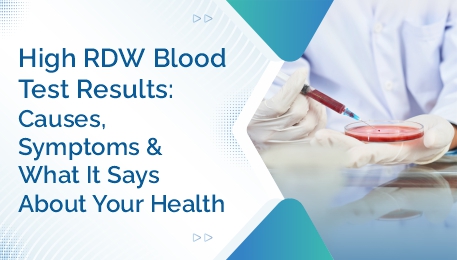


Blood tests provide valuable insights into your overall health, often detecting underlying conditions before noticeable symptoms appear. One important but often overlooked parameter in a Complete Blood Count (CBC) test is RDW, or Red Cell Distribution Width. While many people focus on hemoglobin, white blood cells, or platelet counts, RDW can reveal important information about the size and health of your red blood cells.
If your blood test report shows a high RDW value, you may wonder what it means and whether you should be concerned. High RDW levels can be associated with nutritional deficiencies, anemia, chronic diseases, inflammation, and other health conditions.
What Is RDW in a Blood Test?
RDW stands for Red Cell Distribution Width, a measurement included in a Complete Blood Count (CBC). It indicates the variation in size and volume of red blood cells (RBCs) circulating in your bloodstream.
Normally, red blood cells are relatively uniform in size. When there is significant variation in their size, the RDW value increases. This condition is known as anisocytosis, meaning unequal red blood cell sizes.
Red blood cells play a vital role in transporting oxygen from the lungs to tissues throughout the body. When these cells vary significantly in size, it may affect their ability to function efficiently and could indicate an underlying medical condition.
RDW is usually reported as a percentage. Most laboratories consider a normal RDW range to be approximately 11.5% to 14.5%, although reference ranges may vary slightly.
Why Is RDW Important?
RDW helps healthcare providers evaluate different types of anemia and other blood disorders. It is especially useful when interpreted alongside other CBC parameters such as:
By comparing RDW with MCV values, doctors can narrow down potential causes of abnormal blood cell production and identify nutritional deficiencies or chronic diseases.
What Does a High RDW Blood Test Result Mean?
A high RDW means there is a greater-than-normal variation in the size of your red blood cells. Some cells may be unusually small, while others may be larger than average.
High RDW itself is not a disease. Instead, it serves as a marker indicating that something may be affecting red blood cell production, maturation, or survival.
The significance of a high RDW depends on other blood test results and your overall clinical condition.
Common Causes of High RDW
1. Iron Deficiency Anemia
Iron deficiency is one of the most common causes of elevated RDW.
Iron is essential for producing hemoglobin, the protein responsible for carrying oxygen. When iron levels become low, the bone marrow produces red blood cells of varying sizes, leading to increased RDW.
Common causes of iron deficiency include:
Early iron deficiency often causes an increase in RDW even before other blood parameters become abnormal.
2. Vitamin B12 Deficiency
Vitamin B12 is necessary for proper red blood cell formation. A deficiency can result in the production of abnormally large red blood cells.
As healthy and enlarged cells coexist, RDW rises significantly.
Causes of vitamin B12 deficiency include:
3. Folate Deficiency
Folate (Vitamin B9) also plays an important role in red blood cell production.
Low folate levels can cause large, immature red blood cells to enter circulation, increasing size variability and RDW.
Common risk factors include:
4. Mixed Nutritional Deficiencies
Some individuals may have multiple nutritional deficiencies simultaneously.
For example, iron deficiency combined with vitamin B12 deficiency may produce both small and large red blood cells, resulting in a markedly elevated RDW.
5. Chronic Inflammatory Diseases
Long-term inflammatory conditions can interfere with normal blood cell production.
Examples include:
Inflammation affects iron metabolism and bone marrow function, often leading to increased RDW values.
6. Liver Disease
The liver plays a key role in nutrient storage and metabolism.
Liver disorders can alter red blood cell production and survival, causing significant variations in cell size.
Conditions associated with elevated RDW include:
7. Kidney Disease
Chronic kidney disease can affect red blood cell production because the kidneys produce erythropoietin, a hormone responsible for stimulating RBC formation.
Reduced erythropoietin production may lead to anemia and increased RDW levels.
8. Hemolytic Anemia
In hemolytic anemia, red blood cells are destroyed faster than they are produced.
The bone marrow responds by releasing immature red blood cells into circulation. This mixture of immature and mature cells increases RDW.
9. Bone Marrow Disorders
Diseases affecting bone marrow function can result in abnormal blood cell production.
Examples include:
These conditions often produce significant changes in RDW and other CBC parameters.
10. Cardiovascular Disease
Research suggests that elevated RDW may be associated with an increased risk of cardiovascular disease.
Higher RDW levels have been linked to:
Although RDW does not directly cause heart disease, it may reflect underlying inflammation and physiological stress.
Symptoms Associated with High RDW
High RDW itself does not cause symptoms. Symptoms usually arise from the underlying condition responsible for the elevated value.
Common symptoms may include:
Fatigue
Reduced oxygen delivery to tissues can cause persistent tiredness and low energy levels.
Weakness
Many people with anemia-related high RDW experience muscle weakness and reduced physical endurance.
Shortness of Breath
Inadequate oxygen transport can make routine activities feel more exhausting.
Dizziness
Poor oxygen supply to the brain may result in lightheadedness or dizziness.
Pale Skin
Anemia often causes paleness, particularly in the face, gums, and inner eyelids.
Rapid Heartbeat
The heart may work harder to compensate for decreased oxygen delivery.
Headaches
Frequent headaches may occur due to reduced oxygen supply.
Numbness or Tingling
Vitamin B12 deficiency can cause neurological symptoms such as tingling sensations in the hands and feet.
Difficulty Concentrating
Poor oxygenation may affect cognitive function, leading to reduced focus and concentration.
High RDW and MCV: What the Combination Means
Doctors often interpret RDW together with MCV (Mean Corpuscular Volume).
| RDW + MCV Combination | Possible Causes |
|---|---|
| High RDW + Low MCV | Iron deficiency anemia, Thalassemia, Chronic disease anemia |
| High RDW + Normal MCV | Early iron deficiency, Mixed nutritional deficiencies, Chronic liver disease, Chronic inflammation |
| High RDW + High MCV | Vitamin B12 deficiency, Folate deficiency, Alcohol abuse, Liver disease, Certain medications |
Analyzing both values helps identify the likely cause of abnormal red blood cell production.
Can High RDW Be Serious?
The seriousness of a high RDW result depends entirely on its underlying cause.
In some cases, elevated RDW may simply reflect a mild nutritional deficiency that can be corrected through dietary changes and supplements.
However, it can also signal more serious health conditions such as:
This is why high RDW should always be evaluated in conjunction with other blood test findings and clinical symptoms.
How Is the Cause of High RDW Diagnosed?
If RDW is elevated, your doctor may recommend additional tests to identify the underlying cause.
These may include:
A thorough medical history and physical examination are also important.
How to Lower High RDW Levels
Treatment focuses on correcting the underlying condition.
Improve Iron Intake
Iron-rich foods include:
Iron supplements may be prescribed when necessary.
Correct Vitamin B12 Deficiency
Good dietary sources include:
Some individuals may require B12 injections.
Increase Folate Consumption
Foods rich in folate include:
Manage Chronic Diseases
Proper treatment of underlying inflammatory, kidney, or liver disorders can improve blood cell production and reduce RDW abnormalities.
Follow Medical Advice
Regular monitoring and follow-up testing help ensure that treatment is effective and blood parameters return to normal.
When Should You See a Doctor?
Consult a healthcare provider if:
Early diagnosis can prevent complications and improve treatment outcomes.
Conclusion
A high RDW blood test result indicates increased variation in the size of red blood cells and often serves as an important clue to underlying health issues. While elevated RDW is commonly associated with iron deficiency, vitamin B12 deficiency, folate deficiency, and anemia, it can also be linked to chronic inflammation, liver disease, kidney disease, cardiovascular conditions, and bone marrow disorders.
Because RDW is only one part of a Complete Blood Count, it should always be interpreted alongside other blood parameters and clinical symptoms. Identifying and treating the root cause is the key to restoring healthy red blood cell production and overall well-being.

Working professionals often juggle demanding careers, family responsibilities, long commutes,...
04-06-2026

Blood tests are among the most common and effective tools used to assess overall health,...
04-06-2026

A strong immune system is essential for protecting the body against infections, viruses,...
04-06-2026
Book lab tests, access reports instantly, and get seamless home sample collection with advanced technology.
Trusted by millions, Ampath Labs ensures accurate diagnostics, convenience, and care at your fingertips.




 Select Location


 Get 15% OFF on 1st order above ₹100 Use code:






























































.jpg)