
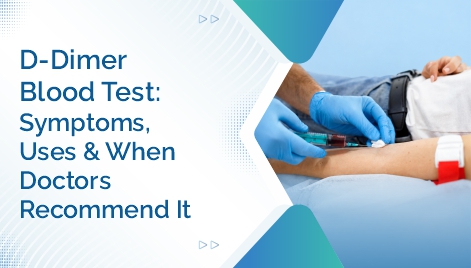


Blood tests play a crucial role in diagnosing and monitoring various medical conditions. Among these tests, the D-Dimer blood test is an important diagnostic tool that helps doctors identify abnormal blood clotting in the body. While the test itself does not confirm a specific disease, it provides valuable information that can help healthcare providers determine whether further investigations are needed. Understanding the purpose of a D-Dimer test, its symptoms, uses, and when doctors recommend it can help patients make informed decisions about their health.
What Is a D-Dimer Blood Test?
A D-Dimer blood test measures the amount of D-Dimer present in the bloodstream. D-Dimer is a protein fragment that is produced when a blood clot dissolves in the body. Normally, blood clotting is a vital process that helps stop bleeding after an injury. Once the body repairs the damaged blood vessel, the clot is broken down, releasing D-Dimer fragments into the blood.
In healthy individuals, D-Dimer levels are usually very low or undetectable. However, elevated levels may indicate that significant blood clot formation and breakdown are occurring somewhere in the body. This is why the D-Dimer test is commonly used to assess conditions related to abnormal clotting.
Why Is the D-Dimer Test Important?
Blood clots can be life-threatening if they form unnecessarily or travel to vital organs. Conditions such as deep vein thrombosis (DVT), pulmonary embolism (PE), stroke, and disseminated intravascular coagulation (DIC) can lead to serious complications if not diagnosed promptly.
The D-Dimer test helps doctors:
Because it is a quick and minimally invasive blood test, it is often one of the first investigations performed when clotting disorders are suspected.
How Does the D-Dimer Test Work?
When a blood clot forms, the body activates a process called fibrinolysis to break down the clot once it is no longer needed. During this process, fibrin—the protein mesh that stabilizes blood clots—is degraded into smaller fragments. D-Dimer is one of these fragments.
The D-Dimer blood test measures the concentration of these protein fragments in the bloodstream. High levels suggest increased clot formation and breakdown activity, prompting doctors to investigate the underlying cause.
The test requires only a small blood sample, usually collected from a vein in the arm.
Symptoms That May Lead to a D-Dimer Test
Doctors typically order a D-Dimer test when a patient shows signs and symptoms that could indicate the presence of a blood clot.
Symptoms of Deep Vein Thrombosis (DVT)
Deep vein thrombosis occurs when a blood clot develops in a deep vein, usually in the legs.
Common symptoms include:
If left untreated, DVT can become dangerous if the clot travels to the lungs.
Symptoms of Pulmonary Embolism (PE)
Pulmonary embolism occurs when a blood clot blocks one of the arteries in the lungs.
Symptoms may include:
A pulmonary embolism is a medical emergency requiring immediate attention.
Symptoms of Stroke
Blood clots can sometimes block blood flow to the brain.
Warning signs include:
In such situations, doctors may use the D-Dimer test as part of a broader diagnostic evaluation.
Symptoms of Disseminated Intravascular Coagulation (DIC)
DIC is a serious condition where widespread clotting occurs throughout the body.
Symptoms may include:
D-Dimer levels are often significantly elevated in patients with DIC.
Common Uses of the D-Dimer Blood Test
1. Diagnosing Deep Vein Thrombosis (DVT)
One of the most common uses of the D-Dimer test is to help rule out DVT. If a patient has a low probability of DVT and a normal D-Dimer result, doctors may safely exclude the diagnosis without further imaging.
2. Detecting Pulmonary Embolism (PE)
The test is frequently used in emergency departments when pulmonary embolism is suspected. A normal D-Dimer level can help rule out PE in low-risk individuals, reducing the need for CT scans.
3. Monitoring Disseminated Intravascular Coagulation (DIC)
Patients with severe infections, trauma, or certain cancers may develop DIC. D-Dimer levels help physicians assess disease severity and monitor treatment effectiveness.
4. Evaluating Stroke Risk
Although not used alone to diagnose stroke, elevated D-Dimer levels may indicate increased clotting activity and support further evaluation.
5. Assessing Blood Clot Risk After Surgery
Major surgeries increase the risk of blood clots. Doctors may use D-Dimer testing in patients who develop suspicious symptoms during recovery.
6. Monitoring COVID-19 Complications
During the COVID-19 pandemic, elevated D-Dimer levels were found to be associated with increased clotting risks and severe disease outcomes. Many hospitals incorporated D-Dimer testing into patient monitoring protocols.
When Do Doctors Recommend a D-Dimer Test?
Doctors recommend a D-Dimer blood test when they suspect abnormal clot formation or need to rule out serious clot-related conditions.
The test may be ordered if:
The decision to order the test depends on a patient's symptoms, medical history, and overall risk factors.
Risk Factors for Blood Clots
Certain individuals are more likely to develop blood clots and may require D-Dimer testing if symptoms appear.
Common risk factors include:
Understanding these risk factors helps doctors determine whether further clotting investigations are necessary.
How Is the Test Performed?
The D-Dimer test is a simple blood test performed in a laboratory or healthcare facility.
Procedure
The procedure usually takes only a few minutes.
Do You Need to Fast Before a D-Dimer Test?
In most cases, fasting is not required before a D-Dimer blood test. Patients can generally eat and drink normally unless other tests are being performed at the same time that require fasting.
Always follow the specific instructions provided by your healthcare provider.
Understanding D-Dimer Test Results
Normal D-Dimer Levels
A normal or negative D-Dimer result generally indicates that significant blood clot formation is unlikely.
In patients with a low clinical risk of clotting disorders, a normal result can often rule out conditions such as DVT or pulmonary embolism.
Elevated D-Dimer Levels
High D-Dimer levels indicate increased clot formation and breakdown in the body. However, elevated levels do not always mean a dangerous clot is present.
Possible causes include:
Because many conditions can raise D-Dimer levels, doctors often order additional tests to confirm the diagnosis.
Limitations of the D-Dimer Test
Although highly useful, the D-Dimer test has limitations.
It Cannot Identify the Location of a Clot
A positive result indicates abnormal clot activity but does not reveal where the clot is located.
False Positives Can Occur
Many conditions can elevate D-Dimer levels even when no dangerous clot is present.
Examples include:
Additional Testing Is Often Needed
When D-Dimer levels are elevated, doctors may recommend imaging tests such as:
These tests provide more definitive information about clot location and severity.
Can D-Dimer Levels Be Reduced Naturally?
Since D-Dimer is a marker rather than a disease itself, treatment focuses on addressing the underlying condition causing elevated levels.
General measures that support healthy circulation include:
Patients should never attempt to self-treat suspected blood clotting disorders without medical supervision.
When Should You Seek Immediate Medical Attention?
Emergency medical care is needed if you experience symptoms that could indicate a serious blood clot, including:
Prompt diagnosis and treatment can significantly improve outcomes and prevent life-threatening complications.
Conclusion
The D-Dimer blood test is an essential diagnostic tool used to evaluate abnormal blood clotting activity in the body. It plays a critical role in helping doctors rule out potentially life-threatening conditions such as deep vein thrombosis, pulmonary embolism, stroke, and disseminated intravascular coagulation. While a normal D-Dimer result can often provide reassurance that serious clotting disorders are unlikely, elevated levels require careful interpretation and often additional testing.
Understanding the symptoms, uses, and importance of the D-Dimer test empowers patients to recognize warning signs early and seek timely medical care. If you experience unexplained leg swelling, chest pain, shortness of breath, or other symptoms suggestive of blood clots, consult a healthcare professional promptly. Early detection and appropriate treatment can be lifesaving and help prevent serious complications.

Working professionals often juggle demanding careers, family responsibilities, long commutes,...
04-06-2026

Blood tests are among the most common and effective tools used to assess overall health,...
04-06-2026

A strong immune system is essential for protecting the body against infections, viruses,...
04-06-2026
Book lab tests, access reports instantly, and get seamless home sample collection with advanced technology.
Trusted by millions, Ampath Labs ensures accurate diagnostics, convenience, and care at your fingertips.




 Select Location



 Get 15% OFF on 1st order above ₹100 Use code:



































































.jpg)