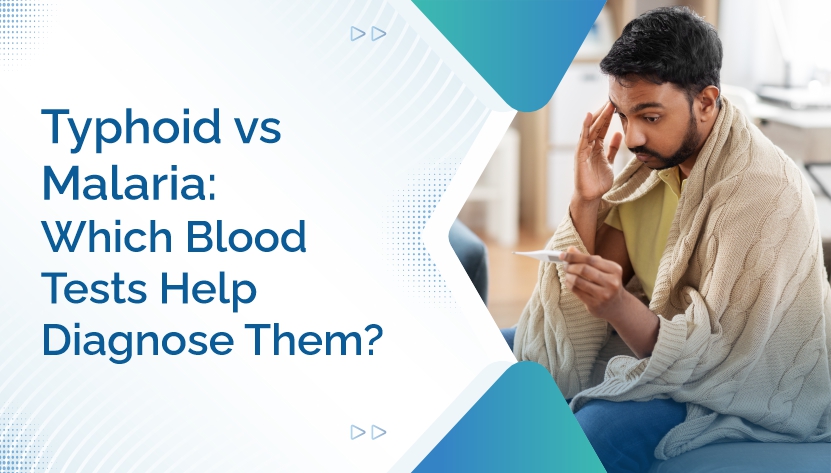


Fever, fatigue, chills, headaches typhoid and malaria share so many symptoms that even experienced clinicians can find it difficult to distinguish between the two without laboratory confirmation. Both are serious infectious diseases that remain a significant public health concern in tropical and subtropical regions. Both can escalate rapidly without timely treatment. And both require very different therapeutic approaches.
Understanding the Typhoid and Malaria Disease
Before examining the diagnostic tests, it helps to understand what distinguishes these two diseases at a biological level.
What Is Typhoid?
Typhoid fever is a bacterial infection caused by Salmonella typhi, transmitted through contaminated food or water. Once ingested, the bacteria enter the bloodstream and spread to multiple organs. Symptoms typically develop 6 to 30 days after exposure and include sustained high fever, abdominal pain, weakness, loss of appetite, and sometimes a characteristic rash known as rose spots.
Without treatment, typhoid can lead to serious complications such as intestinal perforation or sepsis.
What Is Malaria?
Malaria is a parasitic infection caused by Plasmodium species most commonly P. falciparum and P. vivax and transmitted through the bite of an infected Anopheles mosquito. Symptoms appear within 7 to 30 days and include cyclical fevers, rigors, sweating, headache, muscle pain, and nausea.
P. falciparum malaria, if undetected, can progress to severe malaria, which carries a risk of organ failure and death.
Why Accurate Diagnosis Is Critical
The overlapping symptoms of typhoid and malaria make clinical diagnosis unreliable. A patient presenting with high fever and fatigue could have either condition or, in rare cases, both simultaneously. Treating malaria with antibiotics, or typhoid with antimalarials, will not resolve the illness and may delay appropriate care.
Laboratory blood tests are therefore not optional. They are the standard of care.
Blood Tests Used to Diagnose Typhoid
Widal Test
The Widal test is one of the most commonly ordered serological tests for typhoid. It detects antibodies (agglutinins) produced by the immune system in response to Salmonella typhi antigens. A significant rise in antibody titres particularly when measured in paired samples taken 7 to 10 days apart is considered indicative of active infection.
However, the Widal test has known limitations. It can produce false positives in patients who have previously been vaccinated against typhoid or who live in endemic areas where background antibody levels are already elevated. It is most useful when interpreted alongside clinical findings.
Blood Culture
Blood culture remains the gold standard for diagnosing typhoid fever. A sample of the patient's blood is placed in a culture medium and incubated. If Salmonella typhi is present, it will grow and can be identified definitively.
Blood cultures are most productive during the first week of illness, when bacterial load in the bloodstream is highest. Sensitivity decreases if the patient has already begun antibiotic therapy.
Typhidot Test
The Typhidot test detects IgM and IgG antibodies against a specific outer membrane protein of Salmonella typhi. It is a rapid serological test that delivers results faster than blood culture and with reasonable sensitivity and specificity. IgM antibodies are indicative of an acute or current infection, while the presence of IgG antibodies alone may reflect past infection or vaccination.
Complete Blood Count (CBC)
While not diagnostic on its own, a CBC provides supporting information. Patients with typhoid often show leukopenia (low white blood cell count), anaemia, and thrombocytopenia. These findings, viewed alongside other test results, help build a clearer clinical picture.
Blood Tests Used to Diagnose Malaria
Peripheral Blood Smear (Microscopy)
The peripheral blood smear is the traditional gold standard for malaria diagnosis. A thin or thick blood smear is prepared on a glass slide, stained with Giemsa or Field's stain, and examined under a microscope. This method allows the laboratory technician to:
Thick smears are more sensitive for detecting parasites; thin smears allow for more accurate species identification.
Rapid Diagnostic Tests (RDTs)
Malaria RDTs detect specific antigens produced by Plasmodium parasites in the blood. They are widely used in settings where microscopy is not readily available and can deliver results within 15 to 20 minutes.
Common RDTs detect:
RDTs are practical and reliable screening tools, though they cannot quantify parasite density and may occasionally produce false negatives at very low parasitaemia.
Malaria PCR (Polymerase Chain Reaction)
PCR testing identifies malaria parasite DNA in the blood sample. It is the most sensitive and specific diagnostic method available and is particularly useful for:
PCR is typically reserved for reference laboratories or situations where microscopy and RDT results are inconclusive.
Complete Blood Count (CBC)
As with typhoid, a CBC supports malaria diagnosis. Typical findings in malaria include thrombocytopenia, anaemia, and elevated bilirubin. These results are not diagnostic in isolation but align with the broader clinical and laboratory picture.
When Should Both Conditions Be Tested Simultaneously?
In endemic regions where both diseases are prevalent, simultaneous testing is not unusual and in some cases, it is the most responsible approach. A patient presenting with acute febrile illness in a high-risk setting may require a malarial workup and typhoid testing at the same time, particularly if:
Combination rapid tests that detect both Salmonella typhi antibodies and Plasmodium antigens from a single blood sample are now available and increasingly used in resource-limited settings.
Key Differences at a Glance
| Feature | Typhoid | Malaria |
|---|---|---|
| Causative agent | Salmonella typhi (bacteria) | Plasmodium species (parasite) |
| Mode of transmission | Contaminated food/water | Mosquito bite |
| Primary diagnostic test | Blood culture, Widal, Typhidot | Blood smear, RDT, PCR |
| CBC findings | Leukopenia, anaemia | Thrombocytopenia, anaemia |
| Treatment | Antibiotics | Antimalarials |
Getting the Right Test at the Right Time
Timing plays a meaningful role in the accuracy of diagnostic tests for both conditions. Blood cultures for typhoid are most accurate in the first week of illness. Malaria blood smears and RDTs are most reliable during or shortly after a febrile episode, when parasitaemia is highest.
Repeating tests particularly blood smears is sometimes necessary if the initial result is negative but clinical suspicion remains high. A single negative smear does not conclusively rule out malaria.
Conclusion
Both typhoid and malaria are treatable conditions, provided they are accurately and promptly diagnosed. The range of available blood tests from the Widal and Typhidot tests for typhoid to blood smears, RDTs, and PCR for malaria allows clinicians to make confident, evidence-based treatment decisions.
If you are experiencing symptoms consistent with either condition, do not delay testing. Seek diagnosis at a certified diagnostic laboratory staffed by trained professionals equipped with reliable, validated testing methods. Accurate results form the foundation of effective treatment and faster recovery.

Food-related reactions are often lumped together under a single umbrella, but food...
17-09-2026
For decades, cholesterol testing has been the cornerstone of cardiovascular risk...
17-09-2026
Chronic fatigue syndrome (chronic fatigue syndrome), also known as myalgic encephalomyelitis...
17-09-2026
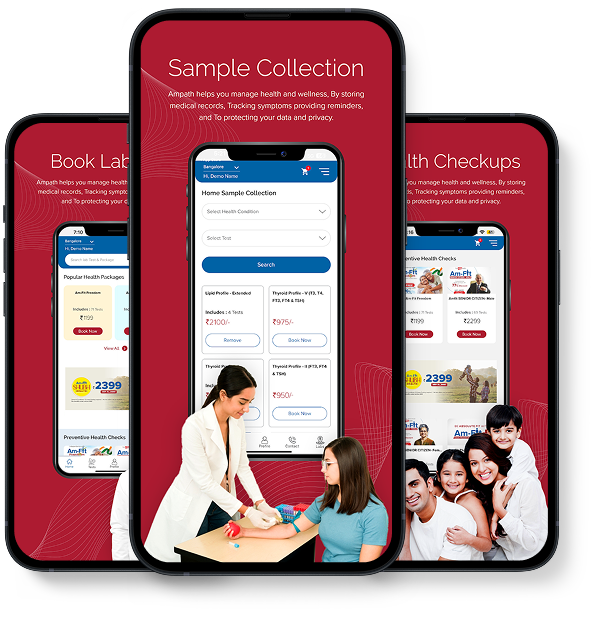
Book lab tests, access reports instantly, and get seamless home sample collection with advanced technology.
Trusted by millions, Ampath Labs ensures accurate diagnostics, convenience, and care at your fingertips.



 Select Location



 Get 15% OFF on 1st order above ₹100 Use code:


































































.jpg)