
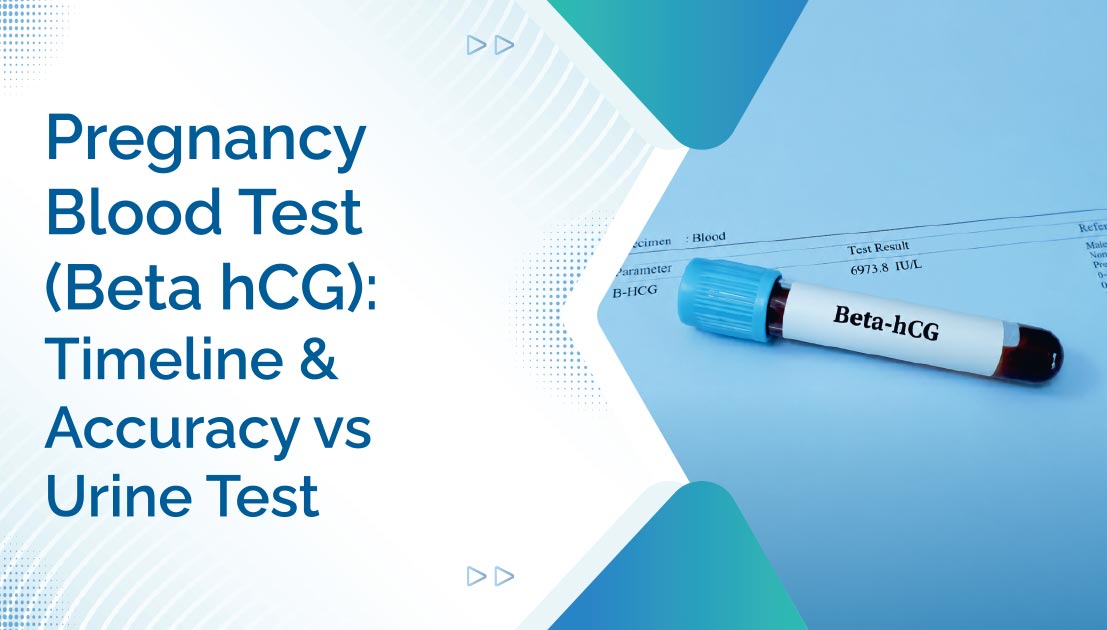


A pregnancy test is often the first step after a missed period or when early pregnancy symptoms begin to appear. While home urine pregnancy tests are widely available and convenient, blood tests offer greater sensitivity and can detect pregnancy earlier. Among the different types of pregnancy blood tests, the Beta Human Chorionic Gonadotropin (Beta hCG) test is considered one of the most reliable methods for confirming pregnancy.
The Beta hCG hormone is produced shortly after a fertilized egg attaches to the uterine lining. Measuring this hormone in the blood helps confirm pregnancy, monitor its progress, and identify potential complications in the early stages.
What Is a Beta hCG Blood Test?
The Beta hCG blood test measures the amount of Human Chorionic Gonadotropin (hCG) present in the bloodstream. This hormone is produced by cells that eventually form the placenta after implantation.
Unlike urine pregnancy tests that simply indicate whether hCG is present, a blood test can detect much smaller amounts of the hormone. It can also provide an exact measurement of hCG levels when a quantitative test is performed.
There are two main types of Beta hCG blood tests:
Qualitative Beta hCG Test
This test answers a simple question:
• Is hCG present in the blood?
• Result: Positive or Negative
It confirms whether pregnancy has occurred but does not indicate how far along the pregnancy is.
Quantitative Beta hCG Test
Also known as the serum Beta hCG test, this measures the precise concentration of hCG in the blood.
It is commonly used to:
What Is hCG and Why Is It Important?
Human Chorionic Gonadotropin is one of the earliest hormones produced during pregnancy.
Its primary role is to:
After implantation, hCG levels begin to rise rapidly, usually doubling every 48 to 72 hours during the first several weeks of a healthy pregnancy.
Because hCG appears in the blood before it reaches detectable levels in urine, blood testing allows earlier pregnancy confirmation.
Pregnancy Timeline: When Does Beta hCG Become Detectable?
The timing of pregnancy testing significantly affects accuracy.
Ovulation
Ovulation generally occurs around the middle of the menstrual cycle.
If fertilization occurs, the egg begins traveling toward the uterus.
Implantation
Implantation typically occurs 6 to 12 days after ovulation.
Only after implantation does the body begin producing hCG.
Early Rise in hCG
Small amounts of hCG can usually be detected in blood:
• About 6–8 days after ovulation
• Often before a missed period
Urine tests generally require higher hormone levels before becoming positive.
After a Missed Period
By the time a missed period occurs:
• Blood tests usually detect pregnancy with very high accuracy.
• Most urine pregnancy tests also become reliable when used correctly.
How Accurate Is a Beta hCG Blood Test?
The Beta hCG blood test is among the most accurate methods available for pregnancy detection.
Its accuracy is generally more than 99% when performed at the appropriate time.
Several factors contribute to this high accuracy:
However, testing too early even before implantation may still result in a negative report because hCG production has not yet begun.
How Soon Can a Blood Pregnancy Test Detect Pregnancy?
Blood pregnancy tests can often detect pregnancy:
This makes them especially useful when early confirmation is needed.
Examples include:
Understanding Beta hCG Levels
Every pregnancy is different.
Rather than focusing on one specific hCG value, healthcare providers often evaluate:
In early pregnancy, healthy pregnancies usually show rising hCG levels every two to three days.
A single value rarely provides the complete picture.
Why Might Your Doctor Recommend a Beta hCG Blood Test?
A healthcare provider may recommend this test for several reasons.
1. Confirming Early Pregnancy
When pregnancy is suspected before a missed period, a blood test provides earlier confirmation than urine testing.
2. Monitoring Pregnancy Progress
Serial Beta hCG measurements help assess whether pregnancy is progressing normally during the first trimester.
3. Evaluating Pregnancy After IVF
Patients undergoing assisted reproductive treatments often require blood testing to confirm implantation and monitor hormone levels.
4. Investigating Bleeding or Pain
Early pregnancy bleeding or abdominal pain may require Beta hCG monitoring to rule out complications.
5. Suspected Ectopic Pregnancy
An ectopic pregnancy occurs when the fertilized egg implants outside the uterus.
Beta hCG levels, combined with ultrasound findings, help healthcare providers evaluate this condition.
6. Monitoring Miscarriage
Falling or slowly increasing hCG levels may indicate pregnancy loss.
Repeated blood tests help monitor changes over time.
Blood Pregnancy Test vs Urine Pregnancy Test
| Feature | Beta hCG Blood Test | Urine Pregnancy Test |
|---|---|---|
| Detects pregnancy earlier | Yes | Usually later |
| Measures exact hormone level | Yes | No |
| Accuracy | Very high | High when used correctly |
| Requires laboratory testing | Yes | No |
| Available at home | No | Yes |
| Useful for monitoring pregnancy | Yes | No |
Blood testing provides more detailed information, while urine tests offer convenience and privacy.
Advantages of a Beta hCG Blood Test
Earlier Detection
Blood tests detect pregnancy before urine tests in many cases.
Greater Sensitivity
They identify very small amounts of hCG that urine tests may miss.
Quantitative Results
Doctors receive an exact hormone measurement rather than a simple positive or negative result.
Monitoring Pregnancy Health
Serial testing helps evaluate:
Reduced User Error
Since testing occurs in a laboratory, mistakes related to home testing are minimized.
Advantages of Urine Pregnancy Tests
Urine pregnancy tests remain popular because they are:
When used after a missed period and according to instructions, they provide reliable results for many individuals.
Can a Blood Pregnancy Test Be Wrong?
Although rare, false results can occur.
False Negative
Possible reasons include:
Repeating the test after 48 hours may provide more accurate information.
False Positive
Less commonly, positive results may occur because of:
Healthcare providers interpret results alongside symptoms, examination findings, and imaging studies when necessary.
Preparing for a Beta hCG Blood Test
No special preparation is usually required.
Patients can generally:
The test involves drawing a small blood sample from a vein in the arm.
Results are often available within a few hours to one day, depending on the laboratory.
When Should You Choose a Blood Test Instead of a Urine Test?
A Beta hCG blood test may be more appropriate if:
For routine pregnancy confirmation after a missed period, a home urine pregnancy test is often sufficient. However, if results are uncertain or medical evaluation is required, a blood test provides greater accuracy and more detailed information.
Conclusion
The Beta hCG blood test is one of the earliest and most accurate methods for confirming pregnancy. By detecting very small amounts of the pregnancy hormone, it provides reliable results even before many urine tests become positive. In addition to confirming pregnancy, quantitative Beta hCG testing plays an important role in monitoring early pregnancy, assessing fertility treatment outcomes, and evaluating potential complications such as ectopic pregnancy or miscarriage.
While home urine pregnancy tests remain a convenient option for many individuals, blood testing offers greater sensitivity, precise hormone measurement, and valuable clinical information when early diagnosis or close monitoring is required. Consulting a healthcare provider can help determine which test is most appropriate based on symptoms, timing, and individual medical needs.

Food-related reactions are often lumped together under a single umbrella, but food...
17-09-2026

For decades, cholesterol testing has been the cornerstone of cardiovascular risk...
17-09-2026

Chronic fatigue syndrome (chronic fatigue syndrome), also known as myalgic encephalomyelitis...
17-09-2026
Book lab tests, access reports instantly, and get seamless home sample collection with advanced technology.
Trusted by millions, Ampath Labs ensures accurate diagnostics, convenience, and care at your fingertips.




 Select Location



 Get 15% OFF on 1st order above ₹100 Use code:



































































.jpg)