
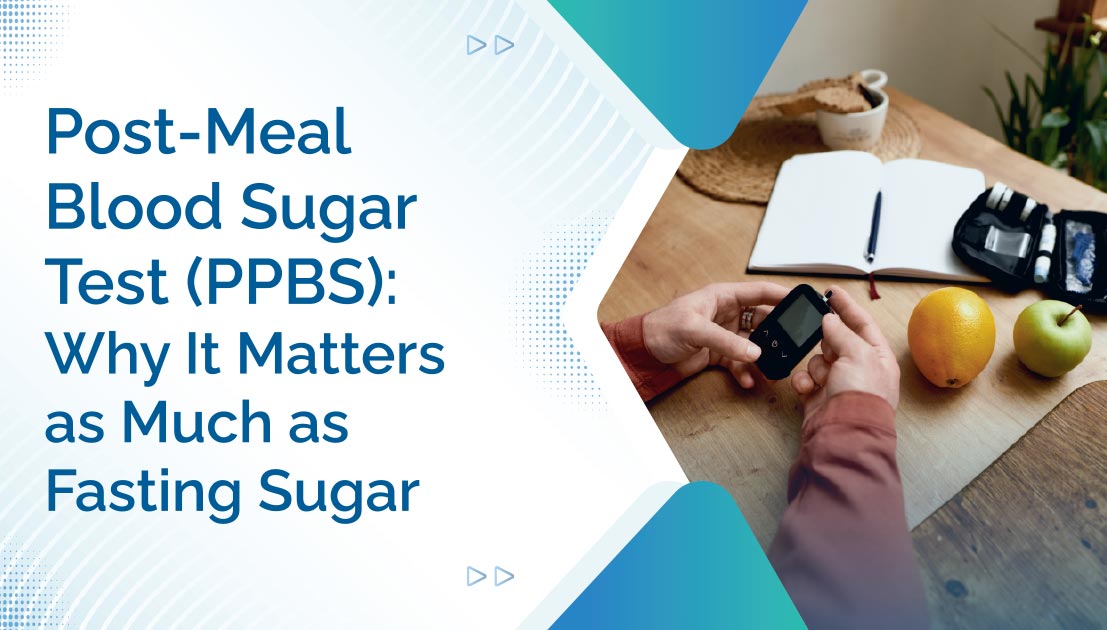


When it comes to monitoring blood sugar levels, most people are familiar with the fasting blood sugar (FBS) test. It is often the first test recommended to evaluate glucose levels after an overnight fast. However, fasting sugar alone does not provide a complete picture of how your body manages glucose throughout the day. This is where the Post-Meal Blood Sugar Test (PPBS) becomes equally important.
The PPBS test measures blood sugar levels exactly two hours after the start of a meal. It reflects how efficiently the body processes glucose after eating, helping doctors identify early signs of diabetes, monitor treatment effectiveness, and assess the risk of long-term complications.
What Is a Post-Meal Blood Sugar Test (PPBS)?
A Post-Prandial Blood Sugar (PPBS) test measures the amount of glucose in your blood two hours after the beginning of a meal. During this period, the body digests carbohydrates, converts them into glucose, and releases insulin to transport glucose into cells for energy.
The PPBS test helps determine whether insulin is working effectively. If blood sugar remains elevated after two hours, it may indicate:
Unlike fasting blood sugar, which measures baseline glucose levels, the PPBS test evaluates how your body responds to food.
Why Blood Sugar Rises After Eating
After every meal, carbohydrates are broken down into glucose.
Normally:
1. Blood glucose rises.
2. The pancreas releases insulin.
3. Cells absorb glucose.
4. Blood sugar gradually returns to normal.
In people with diabetes or insulin resistance:
Repeated post-meal spikes can gradually damage multiple organs even before fasting sugar becomes abnormal.
Why PPBS Is Just as Important as Fasting Blood Sugar
Many people assume that normal fasting sugar means they do not have diabetes. However, fasting sugar alone may miss abnormalities that appear only after meals.
The PPBS test provides additional information about:
Together, fasting blood sugar and PPBS provide a more complete understanding of glucose metabolism.
Conditions Detected by PPBS Testing
A PPBS test helps identify several conditions, including:
Prediabetes
Blood sugar after meals may become abnormal even when fasting levels remain within the normal range.
Early detection allows timely lifestyle changes that may delay or prevent diabetes.
Type 2 Diabetes
Persistent elevation in PPBS levels often indicates diabetes.
The test also helps evaluate disease severity and treatment response.
Gestational Diabetes
Pregnant women may develop diabetes during pregnancy.
PPBS monitoring is commonly used to ensure blood sugar remains within safe limits for both mother and baby.
Monitoring Existing Diabetes
For individuals already diagnosed with diabetes, PPBS testing helps determine:
How Is the PPBS Test Performed?
The procedure is simple.
Step 1
Eat your regular meal.
Avoid:
The goal is to assess your body's usual response to food.
Step 2
Record the time when you start eating.
The two-hour countdown begins from the first bite, not after finishing the meal.
Step 3
A blood sample is collected exactly two hours later.
Testing may be done using:
Do You Need to Fast Before PPBS?
No.
The PPBS test does not require fasting.
However:
Normal PPBS Values
Although reference ranges may vary slightly between laboratories, commonly accepted values include:
| PPBS Level | Interpretation |
|---|---|
| Below 140 mg/dL | Normal |
| 140–199 mg/dL | Prediabetes (impaired glucose tolerance) |
| 200 mg/dL or higher | Suggestive of diabetes (requires medical evaluation) |
Results should always be interpreted along with fasting blood sugar, HbA1c, symptoms, and medical history.
PPBS vs Fasting Blood Sugar
| Feature | Fasting Blood Sugar | PPBS |
|---|---|---|
| Timing | After 8–12 hours fasting | Two hours after meal |
| Purpose | Baseline glucose | Response to food |
| Detects | Diabetes, prediabetes | Insulin efficiency |
| Indicates | Overnight glucose regulation | Daytime glucose control |
| Useful for | Initial diagnosis | Treatment monitoring |
Both tests complement each other rather than replace one another.
Why High PPBS Is Harmful
Consistently elevated blood sugar after meals increases the risk of:
Heart Disease
High glucose damages blood vessels, increasing the likelihood of:
Kidney Damage
Persistent sugar spikes strain kidney filtration units, eventually leading to diabetic kidney disease.
Eye Disease
Elevated PPBS contributes to diabetic retinopathy, which may affect vision if untreated.
Nerve Damage
High glucose can injure nerves, causing:
Poor Wound Healing
High blood sugar slows tissue repair, increasing infection risk.
Symptoms That May Indicate High PPBS
Some people have no symptoms.
Others may experience:
Because symptoms may appear only after significant blood sugar elevation, routine testing remains important.
Who Should Get a PPBS Test?
Doctors commonly recommend PPBS testing for:
Regular testing helps identify problems before complications develop.
Factors That Can Affect PPBS Results
Several factors influence post-meal blood sugar levels.
Meal Composition
Meals high in:
can cause larger glucose spikes.
Balanced meals containing protein, fiber, and healthy fats generally result in steadier blood sugar levels.
Physical Activity
Walking after meals helps muscles use glucose more efficiently.
Lack of activity may contribute to higher PPBS values.
Medications
Insulin and diabetes medicines directly affect post-meal glucose levels.
Other medications, including steroids, may increase blood sugar.
Stress
Stress hormones can raise blood glucose even without changes in diet.
Illness
Infections and fever often elevate blood sugar temporarily.
PPBS During Pregnancy
Pregnancy changes hormone levels, making insulin less effective.
Women with gestational diabetes often require regular PPBS monitoring to reduce risks such as:
Timely monitoring helps guide dietary changes and treatment when necessary.
PPBS and HbA1c: How Are They Different?
The PPBS test measures blood sugar at a specific point after eating.
The HbA1c test reflects the average blood sugar over the previous two to three months.
| PPBS | HbA1c |
|---|---|
| Measures glucose after one meal | Measures long-term glucose control |
| Detects immediate spikes | Shows average control |
| Useful for medication adjustment | Useful for overall diabetes management |
Both tests are valuable and are often used together.
How Often Should PPBS Be Checked?
Testing frequency depends on individual health conditions.
Your doctor may recommend:
Always follow your healthcare provider's recommendations.
Tips to Keep PPBS Under Control
Healthy daily habits play a significant role in controlling post-meal blood sugar.
Eat Balanced Meals
Include:
Limit sugary beverages and highly processed foods.
Control Portion Sizes
Large meals often cause larger glucose spikes.
Eating moderate portions can improve blood sugar control.
Stay Active
A 15–30 minute walk after meals can help lower post-meal blood sugar.
Regular exercise also improves insulin sensitivity.
Take Medications as Prescribed
Skipping diabetes medications or insulin doses may result in uncontrolled PPBS levels.
Maintain a Healthy Weight
Even modest weight loss can improve insulin function and reduce blood sugar spikes.
Drink Enough Water
Adequate hydration supports normal body functions and helps regulate blood sugar levels.
Monitor Blood Sugar Regularly
Routine testing helps identify trends and allows timely treatment adjustments.
Common Misconceptions About PPBS
"My fasting sugar is normal, so I don't need PPBS."
False.
Many individuals develop abnormal post-meal glucose before fasting levels become elevated.
"Only diabetics need PPBS testing."
False.
The test is also useful for diagnosing prediabetes and gestational diabetes.
"High PPBS for one day means diabetes."
Not necessarily.
Temporary elevations may occur due to illness, stress, medications, or an unusually large meal. Repeat testing and medical evaluation are necessary for diagnosis.
"PPBS replaces fasting blood sugar."
False.
Both tests provide different but complementary information.
When to Consult a Doctor
Seek medical advice if:
Early medical intervention can reduce the risk of long-term complications.
Conclusion
The Post-Meal Blood Sugar Test (PPBS) is an important part of diabetes screening and management. While fasting blood sugar measures glucose levels after an overnight fast, PPBS reflects how effectively your body handles glucose after eating—a time when blood sugar naturally rises.
Monitoring both fasting and post-meal blood sugar provides a more complete understanding of glucose control. PPBS testing can identify early diabetes, assess insulin function, monitor treatment effectiveness, and help reduce the risk of serious complications affecting the heart, kidneys, eyes, and nerves.
Maintaining balanced eating habits, staying physically active, following prescribed treatment, and undergoing regular blood sugar testing can help keep post-meal glucose levels within a healthy range. Consistent monitoring allows healthcare providers to make informed decisions and supports better long-term diabetes management.
Food-related reactions are often lumped together under a single umbrella, but food...
17-09-2026
For decades, cholesterol testing has been the cornerstone of cardiovascular risk...
17-09-2026
Chronic fatigue syndrome (chronic fatigue syndrome), also known as myalgic encephalomyelitis...
17-09-2026
Book lab tests, access reports instantly, and get seamless home sample collection with advanced technology.
Trusted by millions, Ampath Labs ensures accurate diagnostics, convenience, and care at your fingertips.



 Select Location



 Get 15% OFF on 1st order above ₹100 Use code:


































































.jpg)