
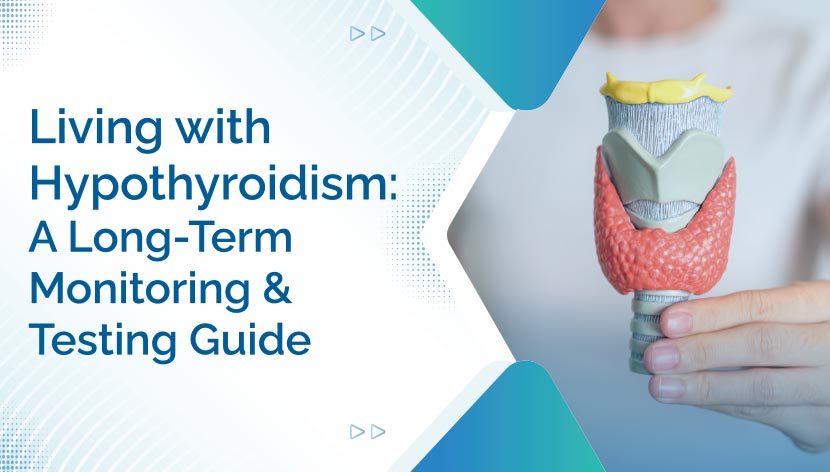


Hypothyroidism is one of the most common endocrine disorders, occurring when the thyroid gland doesn’t produce enough thyroid hormone to meet the body’s needs. While it’s a manageable, treatable condition, living with hypothyroidism typically requires lifelong monitoring to ensure hormone levels remain stable and treatment continues to be effective.
Understanding Hypothyroidism
The thyroid gland produces hormones (T3 and T4) that regulate metabolism, energy production, and numerous bodily functions. When thyroid hormone production is insufficient, the body’s processes slow down, leading to a range of symptoms.
Common Causes of Hypothyroidism
Symptoms of Hypothyroidism
Initial Diagnosis: Key Tests
1. Thyroid-Stimulating Hormone (TSH)
The primary test used for diagnosis. Elevated TSH typically indicates that the thyroid isn’t producing enough hormone, prompting the pituitary gland to release more TSH in an attempt to stimulate it.
2. Free T4
Measures the actual level of circulating thyroid hormone, helping confirm the diagnosis and assess severity.
3. Thyroid Peroxidase Antibodies (TPO-Ab)
Helps identify whether Hashimoto’s thyroiditis, an autoimmune cause, is responsible for the hypothyroidism.
Starting Treatment
Hypothyroidism is typically treated with synthetic thyroid hormone replacement (levothyroxine), taken daily. The goal is to restore hormone levels to a normal range and alleviate symptoms.
Long-Term Monitoring: What to Expect
Initial Monitoring Phase
After starting treatment, TSH levels are typically rechecked every 6–8 weeks to assess how the body is responding and whether dosage adjustments are needed.
Once Stable
Once TSH levels stabilise within the target range, monitoring frequency usually decreases to every 6–12 months, or as recommended by your doctor.
Situations Requiring More Frequent Monitoring
Key Tests for Long-Term Management
1. TSH
The primary marker used to guide ongoing dosage adjustments.
2. Free T4
Sometimes checked alongside TSH, particularly if there’s a discrepancy between symptoms and TSH levels.
3. Lipid Profile
Hypothyroidism can affect cholesterol levels, making periodic lipid monitoring useful, especially if levels were previously abnormal.
4. Complete Blood Count
Occasionally checked, hypothyroidism can sometimes be associated with mild anemia.
5. Vitamin D and B12
Since Hashimoto’s thyroiditis is autoimmune in nature, co-existing deficiencies or autoimmune conditions affecting nutrient absorption are sometimes checked.
Factors That Can Affect Thyroid Hormone Levels
Living Well with Hypothyroidism
What Happens If Hypothyroidism Is Left Untreated?
Untreated hypothyroidism can lead to:
This underscores the importance of consistent, long-term monitoring even when symptoms feel well-controlled.
Conclusion
Living with hypothyroidism is entirely manageable with consistent treatment and long-term monitoring. Understanding the testing schedule — from initial diagnosis through ongoing management — empowers patients to stay engaged in their care and recognise when adjustments might be needed. If you’ve been diagnosed with hypothyroidism, staying consistent with your medication and follow-up testing is the key to feeling your best over the long term.
Frequently Asked Questions
Q1. Will I need to take thyroid medication for life? For most causes of hypothyroidism, particularly Hashimoto’s thyroiditis, treatment is typically lifelong, though dosage may be adjusted over time based on ongoing monitoring.
Q2. Can hypothyroidism symptoms return even while on medication? Yes, this can happen if the dosage needs adjustment, if there are absorption issues, or if other health changes are affecting thyroid hormone needs — which is why regular monitoring is important.
Q3. Is it safe to stop thyroid medication once I feel better? No, feeling better is usually a result of the medication working. Stopping it without medical guidance can cause symptoms to return and hormone levels to become unbalanced again.
Q4. How does pregnancy affect hypothyroidism management? Thyroid hormone needs typically to increase during pregnancy, so more frequent monitoring and dosage adjustments are often necessary to support both maternal and fetal health.

Food-related reactions are often lumped together under a single umbrella, but food...
17-09-2026

For decades, cholesterol testing has been the cornerstone of cardiovascular risk...
17-09-2026
Chronic fatigue syndrome (chronic fatigue syndrome), also known as myalgic encephalomyelitis...
17-09-2026
Book lab tests, access reports instantly, and get seamless home sample collection with advanced technology.
Trusted by millions, Ampath Labs ensures accurate diagnostics, convenience, and care at your fingertips.




 Select Location



 Get 15% OFF on 1st order above ₹100 Use code:



































































.jpg)