
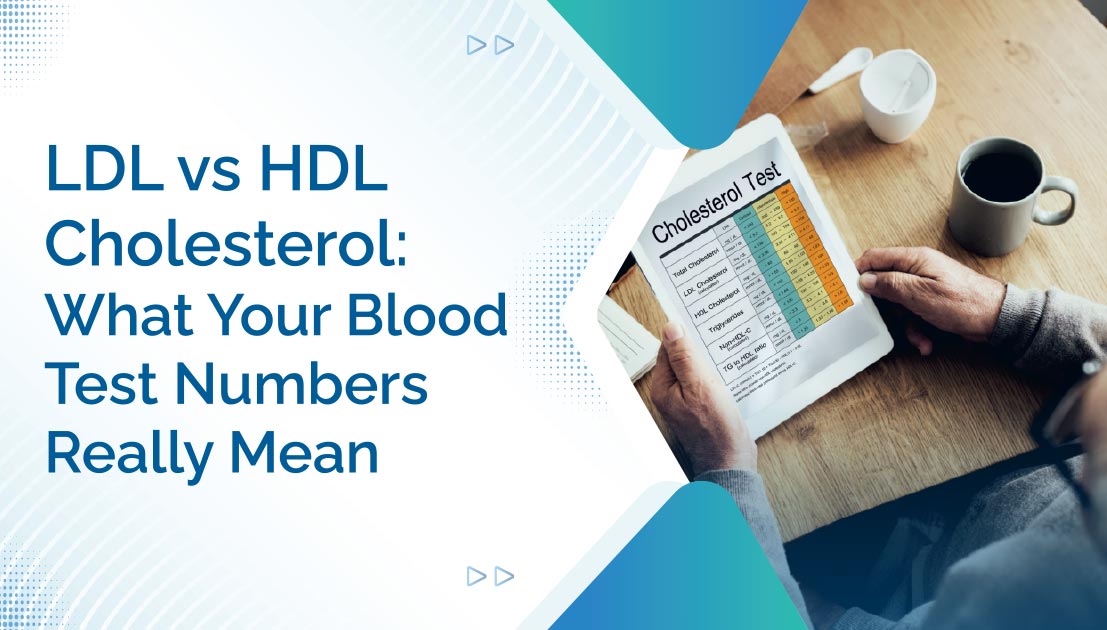


Cholesterol shows up on most routine blood tests, often as a set of numbers that prompt concern or confusion. Understanding those numbers matters because cholesterol isn’t a single thing it’s a mix of particles that play different roles in the body. Two of the most reported types are LDL (low-density lipoprotein) and HDL (high-density lipoprotein). Although headlines often label LDL as “bad” and HDL as “good,” the real picture is more nuanced.
What cholesterol does in the body
Cholesterol is a waxy, fat-like substance that the body needs to build cells, produce hormones, and make vitamin D. The liver produces most of the cholesterol your body requires; the rest comes from food. Cholesterol travels through the bloodstream packaged inside lipoproteins particle complexes made of fat and protein. Two major classes reported on blood tests are LDL and HDL, and understanding their roles explains why doctors focus on them.
LDL: more than just “bad”
LDL particles carry cholesterol from the liver to cells that need it. Problems arise when there is too much LDL cholesterol circulating or when LDL particles are of a type that more readily penetrates artery walls. Excess LDL can deposit cholesterol within the inner lining of arteries, forming fatty streaks that may develop into atherosclerotic plaques over time. These plaques narrow arteries, restrict blood flow, and can rupture, leading to heart attacks and strokes.
Key points about LDL:
Because LDL contributes to plaque formation, most clinical guidelines target LDL reduction as a primary way to lower heart disease risk. Medications such as statins are effective at lowering LDL and have a strong track record in reducing heart attacks and strokes.
HDL: protective but complex
HDL particles carry cholesterol away from peripheral tissues and back to the liver for processing and excretion a process termed reverse cholesterol transport. For years, higher HDL-C levels were associated with lower cardiovascular risk, supporting the idea that HDL protects arteries.
However, recent research reveals a more complex story:
Despite these nuances, HDL remains a useful marker. Higher HDL-C often correlates with healthier lifestyles regular physical activity, not smoking, and a balanced diet all factors that contribute to cardiovascular health.
How to interpret your numbers
Most standard lipid panel’s report:
Some labs and clinicians also estimate non-HDL cholesterol (total cholesterol minus HDL) or order advanced testing for LDL particle number (LDL-P) or apolipoprotein B (apoB), which can give a clearer picture of atherogenic particles.
General interpretation guidelines:
Risk calculators: A personalized approach
Cholesterol numbers should never be viewed in isolation. Clinicians use risk calculators that incorporate age, sex, blood pressure, smoking status, and cholesterol levels to estimate a 10-year cardiovascular risk. This estimated risk helps guide decisions about starting medications and setting LDL targets. For example, someone with moderately elevated LDL but low overall risk might focus on lifestyle modifications first, while someone with high calculated risk might start a statin promptly.
Factors that raise LDL and lower HDL
Several modifiable factors influence LDL and HDL levels:
How to improve your lipid profile
Small, consistent changes can improve LDL and HDL levels and reduce cardiovascular risk. Strategies include:
Dietary changes:
Physical activity:
Weight management:
Quit smoking:
Alcohol in moderation:
Medications when needed
Lifestyle changes are foundational, but many people require medication to reach safe LDL targets. Statins remain the first-line therapy due to proven benefits in reducing cardiovascular events. Other options include ezetimibe, PCSK9 inhibitors, bile acid sequestrants, and newer agents for specific conditions. For very high triglycerides, fibrates or high-dose omega-3 formulations may be recommended. The choice of drug considers baseline risk, cholesterol levels, tolerance, cost, and potential side effects.
Advanced testing when numbers don’t add up
If your clinical picture is inconsistent with standard lipid numbers for example, family history of early heart disease despite normal LDL-C a clinician may order advanced tests:
These tests can refine risk assessment and treatment choices, especially in people with strong family histories or unexplained premature cardiovascular disease.
Putting test results into perspective
When a lab report arrives, take a measured approach:
One illustrative example: two people with the same LDL
Imagine two people both with LDL-C of 140 mg/dL. Person A is a non-smoker, active, normal blood pressure, no family history of early heart disease. Person B smokes, has hypertension, and a family history of heart attacks in close relatives. The same LDL number carries different implications: Person B’s overall cardiovascular risk is much higher and may need more aggressive treatment. This example underscores why context matters.
Conclusion
LDL and HDL cholesterol numbers provide important clues about cardiovascular health, but they are pieces of a larger puzzle. LDL contributes to plaque buildup and is a primary target for risk reduction. HDL supports removal of cholesterol from tissues but its protective effect depends on particle function and overall health context. Triglycerides and other markers add further nuance.
Food-related reactions are often lumped together under a single umbrella, but food...
17-09-2026

For decades, cholesterol testing has been the cornerstone of cardiovascular risk...
17-09-2026

Chronic fatigue syndrome (chronic fatigue syndrome), also known as myalgic encephalomyelitis...
17-09-2026
Book lab tests, access reports instantly, and get seamless home sample collection with advanced technology.
Trusted by millions, Ampath Labs ensures accurate diagnostics, convenience, and care at your fingertips.




 Select Location



 Get 15% OFF on 1st order above ₹100 Use code:



































































.jpg)