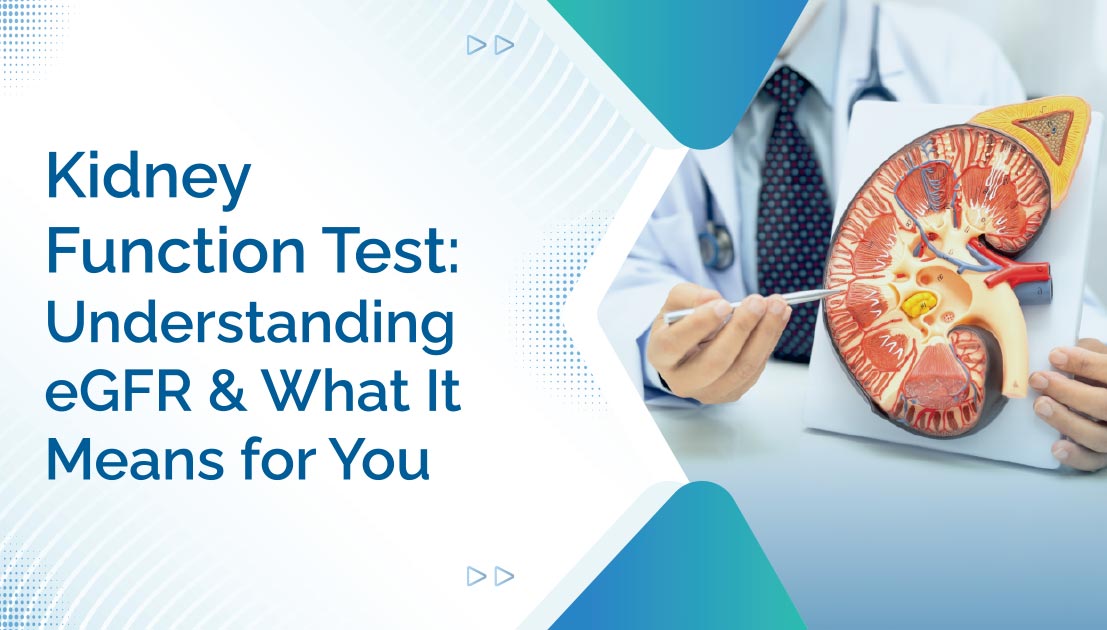


Kidney health plays a vital role in keeping your body functioning properly. These bean-shaped organs work around the clock to filter waste products, remove excess fluids, balance electrolytes, regulate blood pressure, and support the production of red blood cells. When the kidneys are not working efficiently, waste can build up in the bloodstream, affecting multiple organs and overall health.
One of the most important measurements used to assess kidney function is the estimated Glomerular Filtration Rate (eGFR). This value is commonly included in a Kidney Function Test (KFT) and helps doctors understand how effectively your kidneys are filtering blood.
What Is a Kidney Function Test?
A Kidney Function Test (KFT), also known as a renal function test, is a group of blood and urine tests that evaluate how well your kidneys are performing. These tests help detect kidney disease early, monitor existing kidney conditions, and assess kidney health before certain treatments or medications.
A typical kidney function assessment may include:
Among these tests, eGFR is considered one of the most reliable indicators of overall kidney function.
What Is eGFR?
eGFR stands for Estimated Glomerular Filtration Rate. It estimates how much blood your kidneys filter every minute.
Inside each kidney are approximately one million tiny filtering units called glomeruli. These microscopic filters remove waste products and excess water while retaining essential proteins and blood cells.
The eGFR estimates the combined filtering ability of all these glomeruli. It is measured in:
mL/min/1.73 m²
This measurement represents the amount of blood filtered every minute, adjusted for average body surface area.
Rather than directly measuring filtration, laboratories estimate GFR using a mathematical formula based primarily on your blood creatinine level along with factors such as age and sex.
Why Is eGFR Important?
Kidney disease often develops silently. Many people experience no noticeable symptoms until significant kidney damage has already occurred.
An eGFR test helps:
Early identification allows timely treatment, helping slow disease progression and reduce complications.
How Is eGFR Calculated?
The eGFR is estimated using your blood creatinine level.
Creatinine is a waste product produced during normal muscle activity. Healthy kidneys remove creatinine efficiently through urine.
When kidney function declines, creatinine levels increase in the bloodstream.
Laboratories combine creatinine with several factors, including:
Because muscle mass naturally differs among individuals, creatinine alone cannot accurately represent kidney function. The eGFR calculation provides a more meaningful assessment.
Understanding eGFR Results
Your eGFR result indicates how efficiently your kidneys filter waste.
eGFR 90 or Above
An eGFR of 90 mL/min/1.73 m² or higher generally indicates normal kidney function, provided there are no other signs of kidney damage such as protein in urine.
Healthy kidneys continue filtering blood effectively, and no significant impairment is present.
eGFR 60–89
This range usually represents mildly reduced kidney function.
Many older adults naturally have a slightly lower eGFR without having kidney disease.
Doctors usually interpret this result alongside:
If no additional abnormalities are present, this may simply require periodic monitoring.
eGFR 45–59
This suggests mild to moderate loss of kidney function.
Further evaluation is usually recommended to determine the underlying cause.
Treatment may include:
eGFR 30–44
This range indicates moderate to severe kidney damage.
Patients typically require close follow-up with a kidney specialist (nephrologist). Medication doses may need adjustment, and additional investigations may be performed.
eGFR 15–29
This represents severe kidney impairment.
At this stage, kidney function is significantly reduced, and preparations for advanced treatment options may begin if the condition continues to worsen.
eGFR Below 15
An eGFR below 15 indicates kidney failure.
Treatment options may include:
Immediate medical evaluation is necessary.
Can eGFR Change Over Time?
Yes. eGFR is not a fixed number.
Several factors can temporarily affect kidney function, including:
Doctors often repeat kidney function tests over several weeks or months before diagnosing chronic kidney disease.
What Causes a Low eGFR?
A lower-than-normal eGFR does not always mean permanent kidney disease, but it does require medical evaluation.
Diabetes
High blood sugar damages the kidney's tiny blood vessels over time, reducing filtration efficiency.
High Blood Pressure
Poorly controlled blood pressure places excessive strain on kidney blood vessels, gradually affecting kidney function.
Chronic Kidney Disease (CKD)
CKD is a long-term condition where kidney function declines gradually over months or years.
Kidney Infections
Repeated or severe kidney infections may reduce kidney function.
Kidney Stones
Large or recurrent kidney stones can obstruct urine flow and damage kidney tissue.
Certain Medications
Long-term use of some painkillers (NSAIDs), antibiotics, or other medications may affect kidney health.
Autoimmune Diseases
Conditions such as lupus can attack kidney tissues and reduce filtration.
Dehydration
Severe dehydration temporarily reduces blood flow to the kidneys, lowering eGFR.
Who Should Get an eGFR Test?
Regular kidney function testing is recommended for people with increased risk of kidney disease.
These include:
Routine monitoring helps detect kidney problems before symptoms develop.
Symptoms of Reduced Kidney Function
Early kidney disease often causes no symptoms.
As kidney function declines, symptoms may include:
These symptoms can occur in many medical conditions, making laboratory testing essential for accurate diagnosis.
Can eGFR Be Improved?
If kidney damage is permanent, the eGFR may not fully return to normal. However, many people can slow further decline by managing the underlying cause.
Doctors commonly recommend:
Control Blood Sugar
Good diabetes management significantly reduces kidney damage.
Manage Blood Pressure
Keeping blood pressure within the recommended range protects kidney blood vessels.
Stay Hydrated
Adequate water intake supports normal kidney function unless fluid restriction has been advised.
Eat a Kidney-Friendly Diet
Depending on kidney function, doctors may recommend limiting:
Dietary recommendations vary according to individual health needs.
Exercise Regularly
Physical activity supports healthy blood pressure, weight management, and cardiovascular health.
Avoid Smoking
Smoking accelerates kidney damage and increases cardiovascular risk.
Limit Alcohol
Excessive alcohol intake can worsen dehydration and blood pressure.
Avoid Unnecessary Painkillers
Frequent use of NSAIDs should only be under medical guidance, particularly for individuals with existing kidney disease.
Additional Tests Alongside eGFR
Doctors rarely rely on eGFR alone.
Other investigations may include:
Together, these tests provide a more complete picture of kidney health.
When Should You Consult a Doctor?
Seek medical advice if:
Early evaluation helps prevent further kidney damage and improves long-term outcomes.
Conclusion
The estimated Glomerular Filtration Rate (eGFR) is one of the most valuable indicators of kidney health. It provides insight into how efficiently your kidneys filter waste from the blood and helps identify kidney disease long before noticeable symptoms appear.
Understanding your eGFR result allows you to take timely action when needed. Whether your result falls within the normal range or indicates reduced kidney function, regular monitoring and appropriate medical care are essential for protecting kidney health. Combined with other kidney function tests, eGFR enables early diagnosis, supports effective treatment planning, and helps reduce the risk of long-term complications.

Food-related reactions are often lumped together under a single umbrella, but food...
17-09-2026

For decades, cholesterol testing has been the cornerstone of cardiovascular risk...
17-09-2026

Chronic fatigue syndrome (chronic fatigue syndrome), also known as myalgic encephalomyelitis...
17-09-2026
Book lab tests, access reports instantly, and get seamless home sample collection with advanced technology.
Trusted by millions, Ampath Labs ensures accurate diagnostics, convenience, and care at your fingertips.



 Select Location



 Get 15% OFF on 1st order above ₹100 Use code:

































































.jpg)