


Managing diabetes or assessing your risk for metabolic conditions requires accurate diagnostics. Physicians rely on specific blood tests to evaluate how your body processes glucose. Two of the most common diagnostic tools are the fasting blood sugar test and the HbA1c test. While both tests evaluate glucose in your bloodstream, they serve distinct clinical purposes and offer different insights into your metabolic health.
A fasting blood sugar test provides an immediate snapshot of your glucose levels at a single moment in time. Conversely, the HbA1c test delivers a comprehensive average of your blood glucose levels over the past two to three months. Understanding the clinical applications of each test ensures you and your healthcare provider can make informed decisions about your diagnostic and treatment plans.
Understanding the Fasting Blood Sugar Test
A fasting blood sugar (FBS) test, also known as a fasting blood glucose test, measures the amount of glucose circulating in your blood after a period of fasting. Glucose is the primary sugar found in your blood and serves as the main source of energy for your body's cells.
What the Test Measures
This diagnostic test requires patients to abstain from all food and beverages, except water, for eight to twelve hours before the blood draw. By testing your blood in a fasted state, physicians can observe your baseline glucose level without the immediate influence of a recent meal. A normal fasting blood sugar level is generally considered to be under 100 mg/dL. Levels between 100 and 125 mg/dL indicate prediabetes, while a result of 126 mg/dL or higher on two separate tests typically indicates diabetes.
When to Take a Blood Sugar Test
Healthcare providers routinely order fasting blood sugar tests during annual physical examinations. This test is highly effective for immediate diagnostic screening. Your doctor will likely recommend a fasting blood sugar test if you display active symptoms of diabetes, such as excessive thirst, frequent urination, unexplained weight loss, or chronic fatigue.
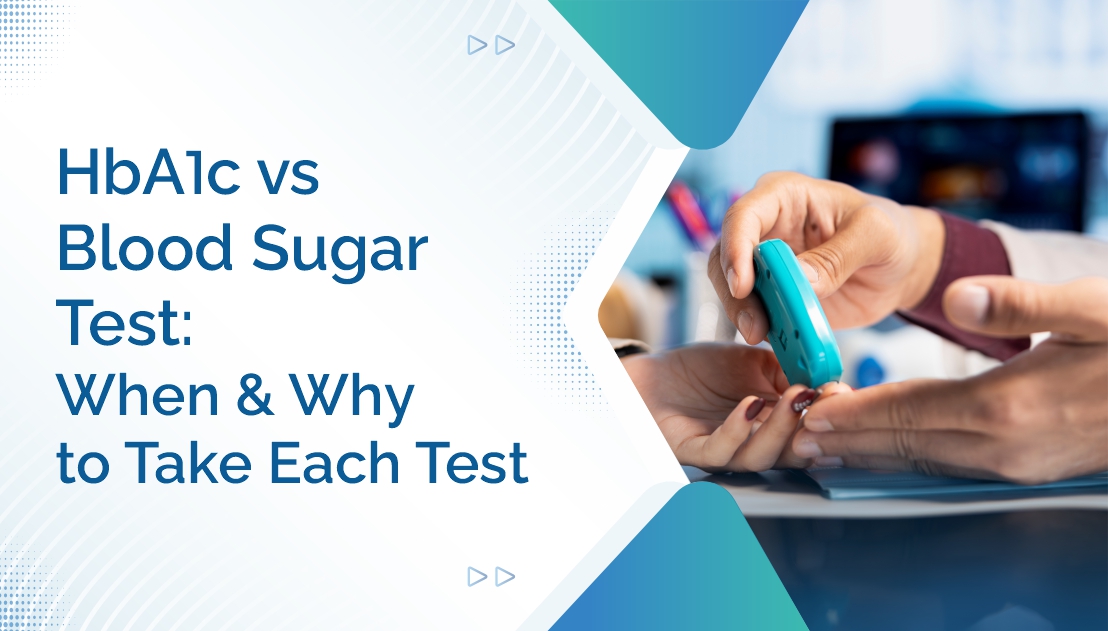
Additionally, individuals managing diagnosed diabetes use portable blood sugar meters daily. These instant capillary blood sugar tests help patients adjust their immediate insulin doses, monitor their diet, and ensure their glucose levels remain stable throughout the day.
Understanding the HbA1c Test
The HbA1c test, often referred to as the hemoglobin A1c or glycosylated hemoglobin test, provides a long-term perspective on your blood sugar control. Hemoglobin is the protein in your red blood cells responsible for carrying oxygen. When glucose enters your bloodstream, it naturally attaches to this hemoglobin protein.
What the HbA1c Test Measures
Because red blood cells have an average lifespan of roughly three months, the HbA1c test measures the percentage of your hemoglobin that is coated with sugar over that specific duration. This provides a reliable average of your blood glucose control over the preceding 60 to 90 days.
A normal HbA1c level is below 5.7%. A result between 5.7% and 6.4% indicates prediabetes, which serves as a critical warning sign that you are at a high risk of developing type 2 diabetes. An HbA1c level of 6.5% or higher on two separate occasions confirms a diabetes diagnosis.
When to Take an HbA1c Test
Unlike the fasting blood sugar test, the HbA1c test does not require fasting. You can have your blood drawn at any time of day. Physicians primarily use the HbA1c test to diagnose type 2 diabetes and prediabetes in adults.
For patients who already have a diabetes diagnosis, the HbA1c test is a standard component of ongoing disease management. Healthcare professionals typically recommend taking this test at least twice a year for patients who are meeting their treatment goals and have stable blood sugar control. Patients who change their medication or who struggle to meet their glycemic targets may need to take the test four times a year.
Key Differences Between the Diagnostics
Understanding the differences between these two tests helps clarify why your healthcare provider might order one over the other, or both simultaneously.
The primary difference lies in the timeframe measured. The blood sugar test checks your current glucose level at the exact moment of the blood draw. The HbA1c test looks back in time to provide a three-month historical average.
Furthermore, fasting requirements differ significantly. The fasting blood sugar test requires strict adherence to an eight- to twelve-hour fast to ensure accurate results. The HbA1c test requires no preparation and is unaffected by what you ate for breakfast that morning.
Both tests provide high-quality, actionable data, but they answer different clinical questions. The fasting glucose test answers how your body is handling sugar right now. The HbA1c test answers how well your body has handled sugar over the past season.
Conclusion
Accurate diagnostics form the foundation of proactive healthcare and effective disease management. Both the fasting blood sugar test and the HbA1c test are indispensable tools in the detection and monitoring of diabetes. By providing distinct clinical perspectives one immediate and one long-term these tests empower physicians to formulate precise, individualized treatment plans.

Food-related reactions are often lumped together under a single umbrella, but food...
17-09-2026
For decades, cholesterol testing has been the cornerstone of cardiovascular risk...
17-09-2026

Chronic fatigue syndrome (chronic fatigue syndrome), also known as myalgic encephalomyelitis...
17-09-2026
Book lab tests, access reports instantly, and get seamless home sample collection with advanced technology.
Trusted by millions, Ampath Labs ensures accurate diagnostics, convenience, and care at your fingertips.




 Select Location



 Get 15% OFF on 1st order above ₹100 Use code:



































































.jpg)