
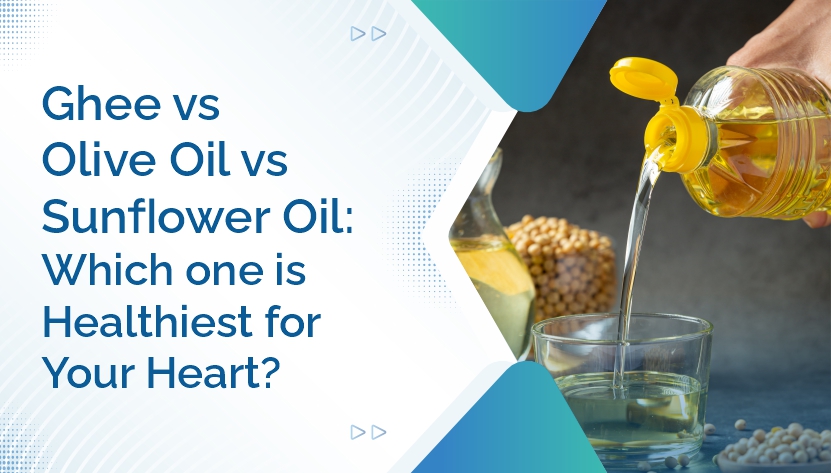


Choosing the right cooking oil is a fundamental decision for maintaining cardiovascular health. With aisles of supermarkets stocked with various options—from traditional staples like ghee to modern favorites like olive oil and sunflower oil—it can be challenging to determine which choice best supports a healthy heart.
The Nutritional Profile of Ghee
Ghee, or clarified butter, has been a staple in Indian cooking and Ayurvedic medicine for centuries. It is created by simmering butter to remove water and milk solids, leaving behind pure butterfat.
Fats Composition
Ghee is primarily composed of saturated fats. While saturated fats have historically been viewed with caution regarding heart health, recent studies suggest that not all saturated fats have the same effect on the body. Ghee contains medium-chain triglycerides (MCTs), which the liver can absorb directly and burn as energy.
However, moderation remains key. Because ghee is rich in saturated fat, excessive consumption can raise low-density lipoprotein (LDL) cholesterol levels in some individuals.
Vitamins and Antioxidants
One of the distinct advantages of ghee is its vitamin content. It is a rich source of fat-soluble vitamins A, E, and K. Vitamin A is essential for vision and immune function, while Vitamin E acts as a powerful antioxidant. Additionally, ghee contains conjugated linoleic acid (CLA), a fatty acid that has been associated with various health benefits, including potential anti-inflammatory properties.
Smoke Point and Stability
Ghee has a high smoke point of approximately 485°F (250°C). This makes it an excellent choice for high-heat cooking methods such as frying and sautéing. Unlike many other oils that break down and release harmful free radicals at high temperatures, ghee remains stable, preserving its nutritional integrity during cooking.
The Nutritional Profile of Olive Oil
Olive oil, specifically extra virgin olive oil (EVOO), is widely recognized as a cornerstone of the heart-healthy Mediterranean diet. It is extracted by pressing whole olives and is celebrated for its minimal processing.
Fats Composition
The primary fatty acid in olive oil is oleic acid, a monounsaturated fat. Monounsaturated fats are proven to support heart health by lowering LDL cholesterol levels while maintaining or even boosting high-density lipoprotein (HDL) cholesterol—the "good" cholesterol. This balance is crucial for reducing the risk of atherosclerosis and heart disease.
Vitamins and Antioxidants
Extra virgin olive oil is packed with powerful antioxidants, including polyphenols and Vitamin E. Polyphenols combat oxidative stress and inflammation in the body, which are major contributors to heart disease. These compounds also improve the health of the lining of blood vessels and may help prevent excessive blood clotting.
Smoke Point and Suitability
Extra virgin olive oil has a lower smoke point compared to ghee, typically around 375°F (190°C). Consequently, it is best suited for low to medium-heat cooking, salad dressings, and finishing drizzles. For high-heat cooking, refined olive oil is an alternative, though it lacks some of the antioxidants found in the virgin variety.
The Nutritional Profile of Sunflower Oil
Sunflower oil is extracted from sunflower seeds and is a common ingredient in processed foods and home cooking due to its mild flavor and affordability.
Fats Composition
Sunflower oil is predominantly composed of polyunsaturated fats, specifically linoleic acid (Omega-6). While Omega-6 fatty acids are essential for the body, the modern diet often includes them in excess compared to Omega-3 fatty acids. An imbalance between Omega-6 and Omega-3 can promote inflammation, which is a risk factor for heart disease.
However, high-oleic sunflower oil—a specific variety bred to be high in monounsaturated fats—offers a profile more similar to olive oil and is considered a heart-healthier option than traditional sunflower oil.
Vitamins and Antioxidants
Sunflower oil is an excellent source of Vitamin E. Just one tablespoon can provide a significant portion of the daily recommended intake. This vitamin functions as an antioxidant, protecting cells from damage. However, sunflower oil generally lacks the diverse polyphenol content found in olive oil.
Smoke Point and Stability
Refined sunflower oil has a high smoke point of about 450°F (232°C), making it suitable for frying and roasting. However, because polyunsaturated fats are less stable than saturated or monounsaturated fats, standard sunflower oil can degrade and oxidize when reheated or used for prolonged frying, potentially forming harmful compounds like aldehydes.
Comparative Analysis for Heart Health
To determine the healthiest option, one must weigh the specific benefits and drawbacks of each oil in the context of a balanced diet.
Impact on Cholesterol
• Olive Oil: Consistently demonstrates the most positive impact on heart health. Its high monounsaturated fat content actively lowers bad cholesterol and reduces blood pressure.
• Sunflower Oil: Can lower LDL cholesterol due to its polyunsaturated content. However, excessive intake of Omega-6 fatty acids without adequate Omega-3s can lead to inflammation. High-oleic versions are preferable.
• Ghee: May increase cholesterol levels if consumed in large quantities due to its saturated fat content. However, in moderation, it provides energy and essential vitamins without the inflammatory risks associated with excess Omega-6s.
Inflammation and Oxidative Stress
Olive oil stands out as the superior choice for combating inflammation, thanks to its rich polyphenol content. Ghee offers neutral to beneficial effects due to CLA, while standard sunflower oil poses a risk of promoting inflammation if not balanced with Omega-3 sources.
Cooking Versatility
For high-heat cooking, ghee is the most stable and safest option, resisting oxidation at temperatures where other oils might degrade. Olive oil is the optimal choice for raw applications or low-heat cooking where its antioxidants can be preserved. Sunflower oil serves as a versatile, high-heat option, provided it is not reused extensively.
Conclusion
The "healthiest" oil depends largely on how you intend to use it.
For daily cooking, salads, and heart protection, extra virgin olive oil is the gold standard. Its proven benefits for cardiovascular health make it an essential component of a heart-conscious diet.
For high-heat cooking, frying, or traditional dishes requiring a rich flavor, ghee is a safe and nutritious alternative, provided it is used in moderation. Its stability at high temperatures prevents the formation of harmful compounds.
Sunflower oil should be selected carefully. Opt for high-oleic sunflower oil to gain the benefits of monounsaturated fats and Vitamin E while minimizing the intake of inflammatory Omega-6 fatty acids.
Food-related reactions are often lumped together under a single umbrella, but food...
17-09-2026

For decades, cholesterol testing has been the cornerstone of cardiovascular risk...
17-09-2026

Chronic fatigue syndrome (chronic fatigue syndrome), also known as myalgic encephalomyelitis...
17-09-2026
Book lab tests, access reports instantly, and get seamless home sample collection with advanced technology.
Trusted by millions, Ampath Labs ensures accurate diagnostics, convenience, and care at your fingertips.




 Select Location



 Get 15% OFF on 1st order above ₹100 Use code:



































































.jpg)