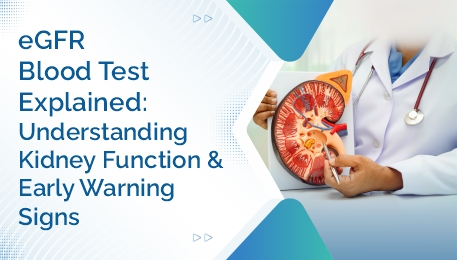


The kidneys play a vital role in maintaining overall health. These bean-shaped organs filter waste products, excess fluids, and toxins from the blood while helping regulate blood pressure, electrolyte balance, and red blood cell production. When kidney function begins to decline, symptoms may not appear until significant damage has already occurred. This is why routine kidney function testing is essential.
One of the most important tests used to assess kidney health is the eGFR (Estimated Glomerular Filtration Rate) Blood Test. This simple blood test helps healthcare providers determine how well the kidneys are filtering waste from the bloodstream. It is widely used to detect early kidney disease, monitor existing kidney conditions, and guide treatment decisions.
What Is an eGFR Blood Test?
The Estimated Glomerular Filtration Rate (eGFR) is a calculation used to estimate how effectively the kidneys filter blood.
The test is based primarily on the level of creatinine, a waste product produced by muscles and removed from the body by the kidneys. When kidney function declines, creatinine levels in the blood rise.
The eGFR calculation considers factors such as:
The result provides an estimate of how many milliliters of blood the kidneys can filter per minute.
The eGFR test is commonly included in:
Because kidney disease often develops silently, eGFR testing helps detect problems before symptoms become severe.
Why Is the eGFR Test Important?
Kidney disease affects millions of people worldwide, and many are unaware they have it until advanced stages.
The eGFR test helps:
Detect Kidney Disease Early
Early-stage kidney disease often has no symptoms. eGFR can reveal reduced kidney function long before noticeable signs develop.
Monitor Existing Kidney Conditions
People diagnosed with kidney disease require regular monitoring to track disease progression.
Assess Risks in Diabetes and Hypertension
Diabetes and high blood pressure are leading causes of kidney damage. Routine eGFR testing helps identify complications early.
Guide Medication Decisions
Certain medications require dose adjustments when kidney function is reduced. eGFR helps healthcare providers prescribe medications safely.
Determine Need for Specialist Care
Persistently low eGFR levels may indicate the need for consultation with a nephrologist (kidney specialist).
How Does the eGFR Test Work?
The eGFR is not measured directly. Instead, it is calculated using blood creatinine levels and specific patient information.
Step 1: Blood Sample Collection
A healthcare professional draws a small blood sample from a vein in the arm.
Step 2: Creatinine Measurement
The laboratory measures the amount of creatinine present in the blood.
Step 3: eGFR Calculation
Using established medical formulas, the laboratory calculates the estimated filtration rate.
Step 4: Interpretation
The result indicates how efficiently the kidneys are filtering waste products.
The higher the eGFR value, the better the kidney function.
Normal eGFR Levels
eGFR is expressed as:
mL/min/1.73 m²
This reflects the amount of blood filtered per minute.
General eGFR Categories
| eGFR Value | Kidney Function |
|---|---|
| 90 or above | Normal kidney function |
| 60–89 | Mild decrease in kidney function |
| 45–59 | Mild to moderate decrease |
| 30–44 | Moderate to severe decrease |
| 15–29 | Severe kidney impairment |
| Below 15 | Kidney failure |
A single eGFR result does not always indicate kidney disease. Doctors typically evaluate trends over time and consider other tests such as urine analysis.
Understanding Chronic Kidney Disease (CKD) Stages
The eGFR result helps classify Chronic Kidney Disease (CKD) into stages.
Stage 1
Stage 2
Stage 3
Stage 4
Stage 5
Early detection allows treatment to slow disease progression.
Symptoms of Reduced Kidney Function
Many people with declining kidney function experience no symptoms during the early stages.
As kidney damage progresses, symptoms may include:
Fatigue
Waste products accumulate in the bloodstream, causing persistent tiredness.
Swelling
Fluid retention can lead to swelling in:
Changes in Urination
Possible changes include:
Difficulty Concentrating
Toxin buildup may affect mental clarity and focus.
Muscle Cramps
Electrolyte imbalances can trigger muscle cramps.
Loss of Appetite
Many individuals experience nausea or decreased appetite.
Shortness of Breath
Fluid buildup can affect lung function.
Anyone experiencing these symptoms should seek medical evaluation.
Common Causes of Low eGFR
Several conditions can reduce kidney filtration ability.
Diabetes
High blood sugar levels damage kidney blood vessels over time. Diabetes is one of the leading causes of chronic kidney disease globally.
High Blood Pressure
Uncontrolled hypertension can damage the kidneys' delicate filtering structures.
Kidney Infections
Repeated infections may cause permanent kidney scarring.
Glomerulonephritis
This condition causes inflammation of the kidney's filtering units.
Polycystic Kidney Disease
A genetic disorder that leads to multiple cysts in the kidneys.
Kidney Stones
Severe or recurrent kidney stones may impair kidney function.
Autoimmune Diseases
Conditions such as lupus can affect kidney tissue.
Dehydration
Severe dehydration may temporarily lower eGFR values.
Heart Disease
Reduced blood flow to the kidneys can impact filtration efficiency.
Risk Factors for Kidney Disease
Certain individuals have a higher risk of developing kidney problems.
Major risk factors include:
People with these risk factors should undergo regular kidney function screening.
Additional Tests Used Alongside eGFR
Doctors often combine eGFR results with other investigations.
Serum Creatinine Test
Measures creatinine levels directly.
Urine Albumin Test
Detects protein leakage into the urine, an early sign of kidney damage.
Urinalysis
Evaluates:
Blood Urea Nitrogen (BUN)
Measures another waste product filtered by the kidneys.
Kidney Ultrasound
Provides imaging to identify structural abnormalities.
Using multiple tests gives a more complete picture of kidney health.
Can eGFR Results Be Incorrect?
While eGFR is highly useful, certain factors may affect accuracy.
Examples include:
Very High Muscle Mass
Athletes may naturally have higher creatinine levels.
Low Muscle Mass
Older adults or individuals with muscle-wasting conditions may have lower creatinine levels.
Pregnancy
Kidney filtration changes during pregnancy.
Severe Illness
Acute illness may temporarily alter results.
Certain Medications
Some medications influence creatinine levels and kidney function measurements.
Healthcare providers interpret eGFR results in the context of overall health and medical history.
How to Improve and Protect Kidney Function
Although some kidney damage may be irreversible, healthy lifestyle choices can help preserve kidney function.
Control Blood Sugar
For people with diabetes, maintaining healthy blood glucose levels is critical.
Manage Blood Pressure
Target blood pressure goals recommended by healthcare providers can reduce kidney damage risk.
Stay Hydrated
Adequate fluid intake supports healthy kidney function.
Eat a Kidney-Friendly Diet
Focus on:
Limit:
Exercise Regularly
Physical activity helps maintain:
Avoid Smoking
Smoking reduces blood flow to the kidneys and accelerates kidney damage.
Use Medications Carefully
Overuse of pain relievers such as NSAIDs can harm the kidneys. Always follow medical advice regarding medication use.
Schedule Regular Health Checkups
Routine blood and urine tests can identify problems before symptoms develop.
When Should You Get an eGFR Test?
An eGFR test may be recommended if you:
Regular monitoring allows earlier intervention and better outcomes.
Conclusion
The eGFR blood test is one of the most valuable tools for evaluating kidney health. By estimating how effectively the kidneys filter waste from the bloodstream, it helps detect kidney disease early, monitor ongoing kidney conditions, and guide treatment decisions.
Because kidney disease often develops without obvious symptoms, routine eGFR testing is especially important for individuals with diabetes, high blood pressure, obesity, heart disease, or a family history of kidney problems. Understanding your eGFR result can empower you to take proactive steps toward protecting kidney function and preventing long-term complications.

Food-related reactions are often lumped together under a single umbrella, but food...
17-09-2026

For decades, cholesterol testing has been the cornerstone of cardiovascular risk...
17-09-2026

Chronic fatigue syndrome (chronic fatigue syndrome), also known as myalgic encephalomyelitis...
17-09-2026
Book lab tests, access reports instantly, and get seamless home sample collection with advanced technology.
Trusted by millions, Ampath Labs ensures accurate diagnostics, convenience, and care at your fingertips.




 Select Location



 Get 15% OFF on 1st order above ₹100 Use code:


































































.jpg)