


When someone arrives at an emergency room with chest pain, one of the first questions doctors need answered is whether the heart muscle itself has been damaged. Cardiac troponin testing has become the gold standard for answering that question quickly and accurately, replacing older, less specific markers that used to guide heart attack diagnosis.
Understanding what troponin is, why it rises during a heart attack, and how doctors use the results can help demystify one of the most important tests in cardiac care.
What Is Cardiac Troponin?
Troponin is a protein complex found in heart and skeletal muscle cells, where it regulates the interaction between muscle fibers during contraction. Two specific forms, troponin I and troponin T, are found almost exclusively in heart muscle, which makes them highly specific markers of cardiac injury.
Under normal circumstances, troponin levels in the bloodstream are extremely low or undetectable. When heart muscle cells are damaged, whether from reduced blood flow, inflammation, or physical strain on the heart, troponin leaks into the bloodstream, and levels rise in a predictable pattern.
Why Doctors Rely on Troponin to Detect Heart Attacks
Before troponin testing became widespread, doctors relied on markers such as creatine kinase, which are less specific to the heart and can rise due to skeletal muscle injury or other conditions. Troponin's specificity to cardiac tissue makes it far more reliable for confirming or ruling out a heart attack.
High-sensitivity troponin assays, now used in many hospitals, can detect even minute amounts of the protein, allowing clinicians to identify heart damage earlier and with greater confidence than older testing methods allowed.
How the Test Is Used in the Emergency Room
When a patient presents with chest pain, shortness of breath, or other symptoms suggestive of a heart attack, doctors typically order an initial troponin test followed by one or more repeat tests over the following hours. This pattern of testing, called a serial troponin protocol, helps track whether levels are rising, which points toward an evolving heart attack, or remaining stable, which suggests another cause.
The timing of the blood draws matters because troponin does not spike immediately after heart damage occurs. Levels typically begin rising within a few hours of an event and can remain elevated for several days, giving doctors a window to catch the injury even if the patient did not arrive right away.
What Elevated Troponin Levels Mean
A rising troponin level in someone with symptoms consistent with reduced blood flow to the heart strongly supports a diagnosis of myocardial infarction, commonly known as a heart attack. The degree of elevation can offer some indication of how much heart muscle has been affected, though this is interpreted alongside imaging, an electrocardiogram, and the patient's overall clinical picture.
It is worth noting that troponin can also rise in conditions other than a classic heart attack, including heart failure, myocarditis, severe infections, kidney failure, and even intense physical exertion such as marathon running. Doctors take this into account when interpreting results, since an elevated troponin alone does not automatically confirm a blocked artery.
The Test Procedure
Cardiac troponin testing requires a simple blood draw from a vein, usually in the arm. No special preparation, such as fasting, is necessary. Because timing is critical in suspected heart attacks, results are often available within thirty minutes to an hour in most hospital laboratories.
Patients being evaluated for chest pain can expect this blood draw to be repeated, often at zero, one, and three hours after arrival, depending on hospital protocol and the specific troponin assay in use.
Beyond the Emergency Room
While troponin is best known for its role in diagnosing acute heart attacks, it is also used to monitor patients with existing heart conditions, assess damage after cardiac procedures, and evaluate heart injury in critically ill patients in intensive care settings. Some research has explored using very low, chronically elevated troponin levels as a marker of long-term cardiovascular risk, though this application is still evolving.
For patients recovering from a cardiac event, doctors may track troponin trends over the following days to confirm the injury is resolving as expected and to help guide decisions about further treatment or intervention.
Limitations to Keep in Mind
No single test tells the whole story of a person's heart health. Troponin results are always interpreted alongside symptoms, an electrocardiogram, imaging studies, and a patient's medical history. A normal troponin level in the first hour does not always rule out a heart attack, which is why repeat testing over several hours remains standard practice.
Conversely, a mildly elevated troponin in someone without classic heart attack symptoms may reflect a different underlying issue entirely, from kidney disease to severe respiratory illness, and requires careful clinical judgment rather than an automatic assumption of cardiac injury.
Conclusion
Cardiac troponin testing has transformed how quickly and accurately doctors can identify heart attacks, often within a matter of hours rather than days. Its high specificity for heart muscle damage makes it one of the most valuable tools in emergency cardiology. If you or someone you know experiences chest pain, shortness of breath, or other warning signs of a heart attack, seeking immediate medical attention allows this test to do what it does best: give doctors a clear, fast answer when time matters most.

Food-related reactions are often lumped together under a single umbrella, but food...
17-09-2026
For decades, cholesterol testing has been the cornerstone of cardiovascular risk...
17-09-2026
Chronic fatigue syndrome (chronic fatigue syndrome), also known as myalgic encephalomyelitis...
17-09-2026
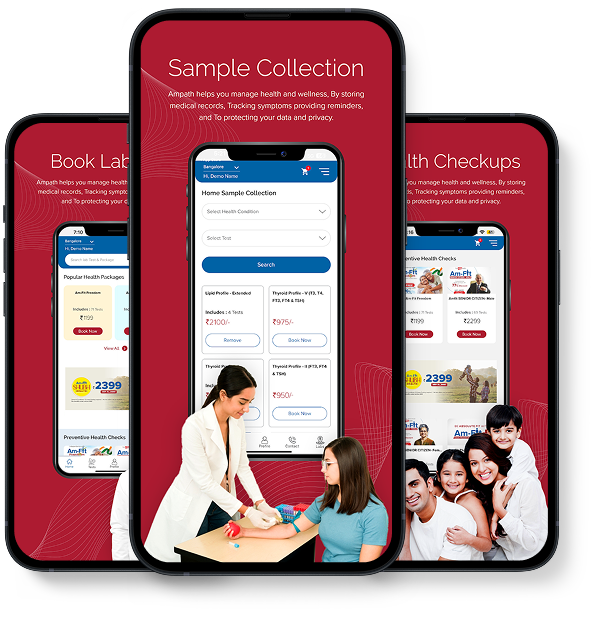
Book lab tests, access reports instantly, and get seamless home sample collection with advanced technology.
Trusted by millions, Ampath Labs ensures accurate diagnostics, convenience, and care at your fingertips.



 Select Location



 Get 15% OFF on 1st order above ₹100 Use code:



































































.jpg)