
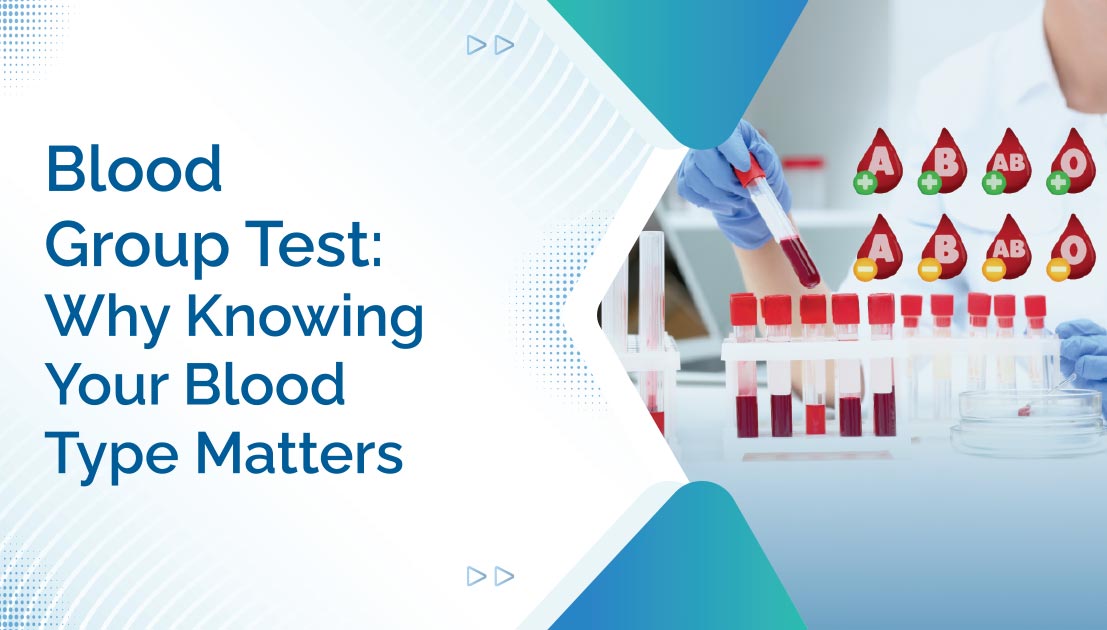


A blood group test is one of the most common laboratory tests performed across the world. While many people undergo this test before surgery, during pregnancy, or while donating blood, its importance extends far beyond these situations. Knowing your blood type can play a vital role during medical emergencies, blood transfusions, pregnancy care, and even organ transplantation.
Despite being a simple blood test, blood group testing provides critical information that can help healthcare professionals make quick and accurate treatment decisions. Every individual has a specific blood type determined by inherited genetic factors, and receiving the wrong blood type during a transfusion can lead to severe complications.
What Is a Blood Group Test?
A blood group test identifies your blood type based on the presence or absence of specific antigens found on the surface of red blood cells. These antigens are proteins and sugars inherited from your parents.
The test primarily determines:
Together, these identify your complete blood type, such as:
Blood typing is performed in laboratories using a small blood sample and usually takes only a few minutes.
Understanding the ABO Blood Group System
The ABO blood group system classifies blood into four major groups.
Blood Group A
People with blood group A have:
They can receive blood from:
Blood Group B
People with blood group B have:
They can receive blood from:
Blood Group AB
People with blood group AB have:
They can receive blood from all blood groups.
This is why AB-positive individuals are often called universal recipients.
Blood Group O
People with blood group O have:
They can donate blood to many other blood groups, especially O-negative individuals, who are considered universal blood donors.
What Is the Rh Factor?
The Rh factor is another protein found on red blood cells.
If present:
Rh Positive (Rh+)
If absent:
Rh Negative (Rh-)
For example:
Rh compatibility is extremely important during blood transfusions and pregnancy.
Why Knowing Your Blood Type Matters
Knowing your blood group can make a significant difference in medical care.
Safe Blood Transfusions
Blood transfusions save millions of lives every year.
They are needed during:
Receiving incompatible blood can cause:
Blood typing helps ensure safe transfusions.
Emergency Medical Care
During emergencies, doctors may need blood immediately.
If your blood type is already known, treatment can begin more quickly.
In situations where blood typing is unavailable, O-negative blood may be used because it has the lowest risk of incompatibility.
Pregnancy Care
Blood group testing is a routine part of prenatal care.
Special attention is given to the Rh factor.
If:
Mother = Rh negative
Baby = Rh positive
The mother's immune system may produce antibodies against the baby's blood cells.
This condition is called Rh incompatibility.
Without treatment, it may lead to:
Fortunately, timely diagnosis and preventive injections greatly reduce these risks.
Organ Transplantation
Blood type compatibility is essential for:
Matching blood groups lowers the risk of transplant rejection.
Blood Donation
Blood donors play an important role in healthcare.
Knowing your blood group helps:
Rare blood groups are especially valuable because compatible donors may be difficult to find.
Medical Records
Many hospitals include blood group information in patient records.
This allows healthcare providers to respond more efficiently during emergencies.
Common Blood Types
The distribution of blood groups varies across populations.
Generally:
When Is a Blood Group Test Recommended?
Doctors may advise blood typing in several situations.
Before Surgery
Operations involving significant blood loss require preparation for possible transfusions.
During Pregnancy
Blood group and Rh factor testing are standard prenatal investigations.
Before Blood Donation
Every donor undergoes blood typing before donation.
Before Receiving Blood
Blood group testing is mandatory before transfusions.
Organ Transplant Evaluation
Matching donor and recipient blood types is one of the first steps in transplant planning.
Employment or Medical Screening
Some organizations include blood group testing as part of routine medical examinations.
Personal Health Records
Many individuals choose to know their blood group for future medical needs.
How Is the Blood Group Test Performed?
The procedure is simple.
Step 1
A healthcare professional cleans the skin.
Step 2
A sterile needle collects a small blood sample from a vein.
Step 3
The sample is sent to the laboratory.
Step 4
Laboratory specialists mix the blood with antibodies against A, B, and Rh antigens.
Step 5
The pattern of agglutination (clumping) identifies the blood group.
The entire process usually takes only a short time.
Is Any Preparation Required?
No special preparation is usually necessary.
Patients can:
If additional blood tests are ordered together, fasting instructions may differ.
Understanding Blood Compatibility
Proper matching between donor and recipient is essential.
| Recipient Blood Type | Compatible Donor Blood |
|---|---|
| O- | O- |
| O+ | O+, O- |
| A- | A-, O- |
| A+ | A+, A-, O+, O- |
| B- | B-, O- |
| B+ | B+, B-, O+, O- |
| AB- | AB-, A-, B-, O- |
| AB+ | All blood groups |
Hospitals also perform cross-matching before transfusion to ensure compatibility.
What Is Cross-Matching?
Cross-matching is an additional laboratory test performed before blood transfusion.
It checks whether:
Can safely be mixed.
Even if blood groups match, cross-matching helps identify unexpected antibodies that may cause transfusion reactions.
What Happens If the Wrong Blood Type Is Given?
Receiving incompatible blood is a medical emergency.
Possible complications include:
Strict laboratory procedures minimize this risk.
Can Blood Type Change?
For most people, blood type remains the same throughout life because it is inherited genetically.
Rare situations where blood type characteristics may appear to change include:
These situations require specialized medical evaluation.
Blood Group Testing in Newborns
Blood typing may be performed after birth if:
Early identification helps guide appropriate treatment.
Rare Blood Groups
Although most people belong to common blood groups, some have rare blood types.
Examples include:
Individuals with rare blood groups often benefit from being registered with specialized blood banks because finding compatible donors can be challenging.
Myths About Blood Groups
Several misconceptions exist regarding blood types.
Myth: Blood type determines personality.
There is no scientific evidence that blood type influences personality traits or behavior.
Myth: Blood type determines diet.
Some diets claim that people should eat according to their blood group, but current scientific research does not support these recommendations.
Myth: Blood group affects intelligence.
Blood type has no proven relationship with intelligence or academic performance.
Myth: You only need to know your blood group before surgery.
Knowing your blood type can be useful throughout life, especially during emergencies, pregnancy, blood donation, and other medical situations.
Benefits of Knowing Your Blood Group
Keeping a record of your blood type offers several practical advantages:
Conclusion
A blood group test is a simple yet essential investigation that provides valuable information for lifelong healthcare. Knowing your blood type supports safe blood transfusions, timely emergency treatment, pregnancy care, organ transplantation, and blood donation. Since blood type remains constant throughout life for most individuals, having this information readily available can help healthcare providers respond quickly when every minute matters.
Whether you are undergoing a routine health check-up, planning a surgery, expecting a baby, or considering becoming a blood donor, a blood group test is a small step that can make a significant difference in medical care and patient safety.
Food-related reactions are often lumped together under a single umbrella, but food...
17-09-2026
For decades, cholesterol testing has been the cornerstone of cardiovascular risk...
17-09-2026
Chronic fatigue syndrome (chronic fatigue syndrome), also known as myalgic encephalomyelitis...
17-09-2026
Book lab tests, access reports instantly, and get seamless home sample collection with advanced technology.
Trusted by millions, Ampath Labs ensures accurate diagnostics, convenience, and care at your fingertips.



 Select Location



 Get 15% OFF on 1st order above ₹100 Use code:



































































.jpg)