
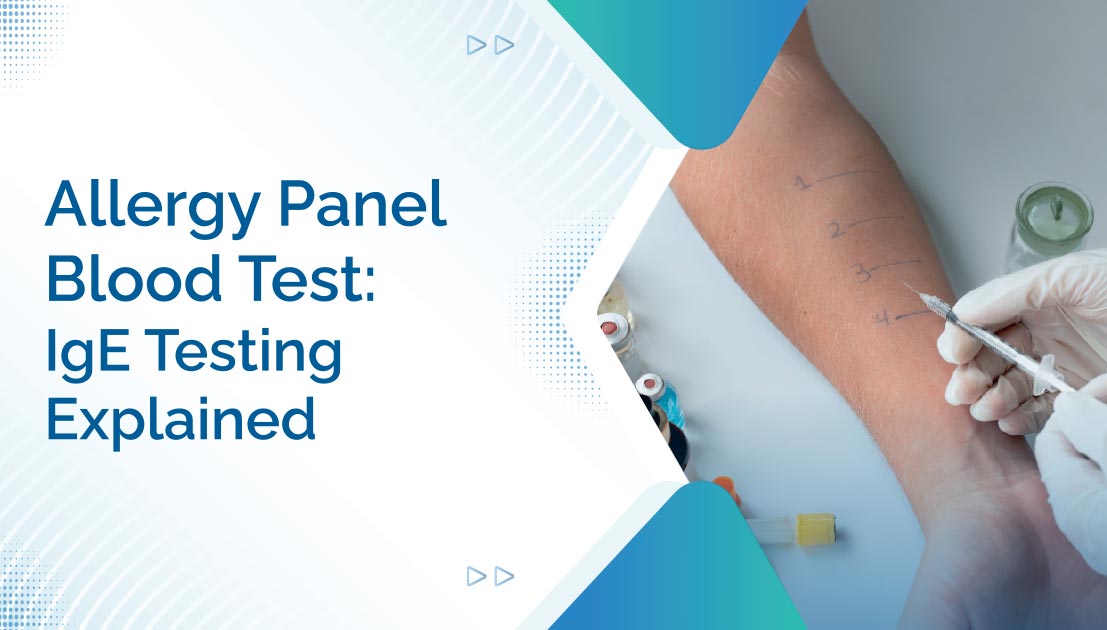


Sneezing fits, itchy skin, and unexplained digestive upset can all point toward an allergy, but pinpointing the exact trigger by trial and error can take months of frustration. The allergy panel blood test, which measures immunoglobulin E, or IgE, antibodies, offers a more targeted way to identify what your immune system is reacting to, without the wait times and skin irritation associated with traditional skin-prick testing.
What Is IgE and Why Does It Matter?
Immunoglobulin E is a type of antibody the immune system produces in response to substances it perceives as threats, even when those substances, such as pollen, pet dander, or certain foods, are harmless. In people with allergies, the immune system overreacts to these triggers, producing specific IgE antibodies that lead to symptoms ranging from mild irritation to severe reactions.
Everyone produces some baseline level of IgE, but people with allergic conditions typically have elevated levels of IgE specific to the substances that trigger their symptoms, whether that's ragweed pollen, shellfish, or a particular medication.
How the Allergy Blood Test Works
An IgE allergy panel involves a single blood draw, which is then tested in a laboratory against a range of specific allergens, from environmental triggers like dust mites and mold to food allergens like peanuts, eggs, and milk. Unlike skin-prick testing, which requires direct skin exposure to potential allergens, this blood test can be performed regardless of skin conditions, certain medications, or age.
Results typically report a numerical value for each allergen tested, indicating the concentration of allergen-specific IgE detected. Higher values generally suggest a stronger immune reaction to that particular substance, though the relationship between IgE level and symptom severity is not always exact.
When Blood Testing Is Preferred Over Skin Testing
Common Symptoms That Prompt Allergy Testing
People often seek allergy testing after experiencing recurring symptoms such as sneezing, nasal congestion, itchy or watery eyes, hives, digestive discomfort after eating certain foods, or unexplained skin flare-ups. Identifying the specific trigger allows for more targeted avoidance strategies and treatment plans.
In some cases, allergy testing is also used to evaluate more serious reactions, including those involving swelling of the throat or difficulty breathing, to help confirm the responsible allergen and guide long-term management, including the potential need for emergency epinephrine.
Interpreting Your Results
A positive result on an IgE panel indicates sensitization to a particular allergen, but it does not always mean you will experience symptoms upon exposure. Some people show detectable IgE antibodies to a substance without ever having a clinical reaction, which is why results are always interpreted alongside your symptom history.
Conversely, a negative result for a specific allergen makes an IgE-mediated allergic reaction to that substance less likely, though it does not rule out other types of intolerance or sensitivity that operate through different mechanisms, such as lactose intolerance, which is not an IgE-mediated allergy at all.
What the Test Does Not Tell You
IgE testing identifies sensitization, not necessarily the severity of a potential reaction. Two people with similarly elevated IgE levels to peanuts, for example, might experience very different reactions upon exposure, ranging from mild discomfort to a severe, life-threatening response. This is why allergy specialists combine blood test results with a detailed history and, in some cases, supervised food challenges to confirm a diagnosis.
The test also does not diagnose non-allergic conditions that can mimic allergy symptoms, such as certain food intolerances or chronic sinus issues unrelated to allergens.
Managing Confirmed Allergies
Once a specific allergen is identified, management typically involves avoidance strategies, medications such as antihistamines or nasal corticosteroids for environmental allergies, and in some cases, allergen immunotherapy, which gradually desensitizes the immune system over time. For food allergies, an allergist may also prescribe emergency epinephrine for use in case of accidental exposure and severe reaction.
Regular follow-up with an allergist helps track whether sensitivities change over time, which can happen, particularly in children who sometimes outgrow certain food allergies as their immune system matures.
Conclusion
IgE allergy panel testing offers a practical, blood-based way to identify specific triggers behind allergic symptoms, particularly for people who cannot undergo traditional skin testing. While it is not a complete diagnostic tool on its own, when combined with a detailed symptom history and guidance from an allergist, it provides valuable direction for managing allergies more precisely and confidently.

Food-related reactions are often lumped together under a single umbrella, but food...
17-09-2026

For decades, cholesterol testing has been the cornerstone of cardiovascular risk...
17-09-2026

Chronic fatigue syndrome (chronic fatigue syndrome), also known as myalgic encephalomyelitis...
17-09-2026
Book lab tests, access reports instantly, and get seamless home sample collection with advanced technology.
Trusted by millions, Ampath Labs ensures accurate diagnostics, convenience, and care at your fingertips.




 Select Location



 Get 15% OFF on 1st order above ₹100 Use code:



































































.jpg)