
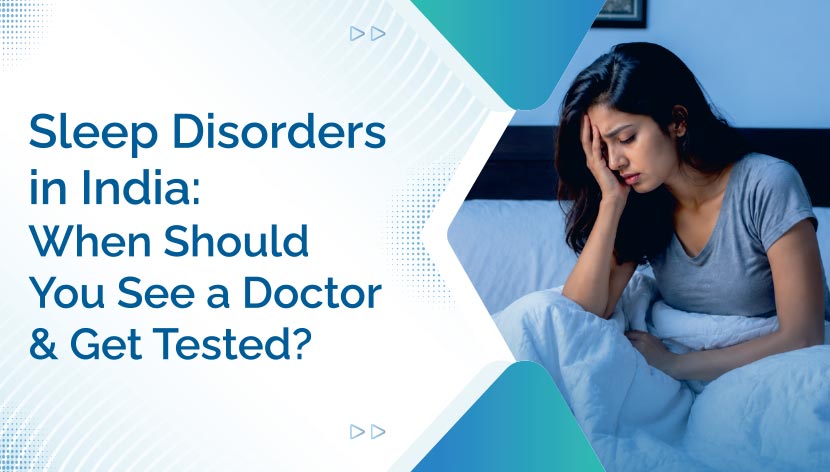


Sleep is often the first thing sacrificed amid busy schedules, but chronic sleep problems can have significant effects on physical and mental health. Sleep disorders are increasingly common in India, driven by factors like stress, changing work patterns, and lifestyle habits, yet many people don’t realise when their sleep issues warrant medical evaluation and testing.
Common Sleep Disorders
Insomnia
Difficulty falling asleep, staying asleep, or waking up too early, leading to inadequate rest.
Obstructive Sleep Apnea (OSA)
A condition where breathing repeatedly stops and starts during sleep due to airway obstruction, often accompanied by loud snoring.
Restless Legs Syndrome (RLS)
An uncomfortable sensation in the legs, often described as tingling or crawling, accompanied by an urge to move them, particularly at night.
Narcolepsy
A neurological condition causing excessive daytime sleepiness and sudden sleep attacks.
Circadian Rhythm Disorders
Disruptions to the body’s natural sleep-wake cycle, often related to shift work or irregular schedules.
Signs That Warrant Medical Attention
Why Sleep Disorders Are Often Overlooked in India
Key Tests Used to Diagnose Sleep Disorders
1. Polysomnography (Sleep Study)
Considered the gold standard for diagnosing sleep disorders like obstructive sleep apnea. This overnight test monitors brain waves, oxygen levels, heart rate, breathing patterns, and eye and leg movements during sleep.
2. Home Sleep Apnea Testing
A simplified version of polysomnography that can be conducted at home, monitoring key parameters like breathing patterns and oxygen levels, though it may be less comprehensive than an in-lab study.
3. Multiple Sleep Latency Test (MSLT)
Used to diagnose narcolepsy, this test measures how quickly a person falls asleep during scheduled daytime naps.
4. Actigraphy
Involves wearing a device that tracks movement and activity patterns over several days to assess sleep-wake cycles, useful for diagnosing circadian rhythm disorders.
5. Blood Tests
While not directly diagnostic of sleep disorders, blood tests can help rule out or identify contributing factors:
The Connection Between Sleep Disorders and Other Health Conditions
Untreated sleep disorders, particularly sleep apnea, have been linked to:
This connection underscores why addressing sleep disorders isn’t just about improving rest — it’s about protecting overall long-term health.
When Should You See a Doctor?
Improving Sleep Health
Conclusion
Sleep disorders are more common in India than many realise, often going unrecognised due to cultural normalisation and limited awareness of their broader health impact. If you’re experiencing persistent sleep difficulties, loud snoring, or excessive daytime sleepiness, don’t dismiss these as minor inconveniences. Seeking medical evaluation and appropriate testing can uncover underlying issues and open the door to effective treatment, improving both your sleep and your overall health.
Frequently Asked Questions
Q1. Is snoring always a sign of sleep apnea? Not always — many people snore without having sleep apnea, but loud snoring accompanied by gasping, choking, or pauses in breathing warrants further evaluation.
Q2. Can sleep disorders be diagnosed without an overnight sleep study? In some cases, home sleep apnea tests can provide useful information, though a full in-lab polysomnography may be needed for a more comprehensive diagnosis, particularly for complex cases.
Q3. How much sleep do adults actually need? Most adults need between 7–9 hours of quality sleep per night, though individual needs can vary slightly.
Q4. Can treating an underlying sleep disorder improve other health conditions? Yes, in many cases, treating conditions like sleep apnea can lead to improvements in blood pressure, blood sugar control, and overall quality of life.

Food-related reactions are often lumped together under a single umbrella, but food...
17-09-2026

For decades, cholesterol testing has been the cornerstone of cardiovascular risk...
17-09-2026
Chronic fatigue syndrome (chronic fatigue syndrome), also known as myalgic encephalomyelitis...
17-09-2026
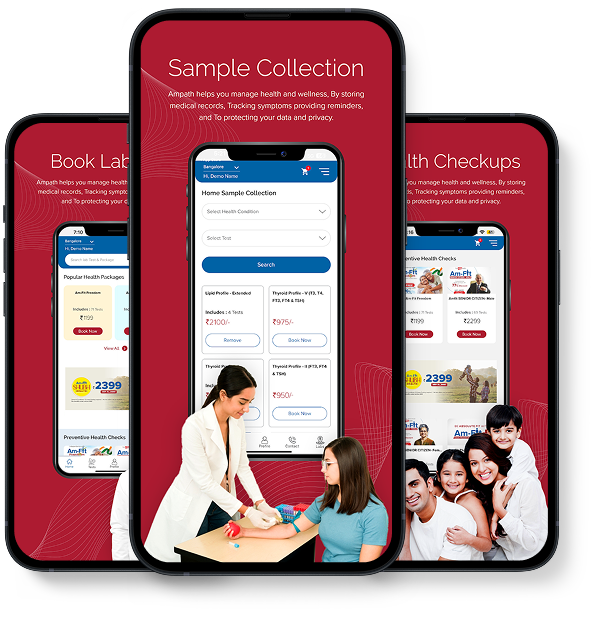
Book lab tests, access reports instantly, and get seamless home sample collection with advanced technology.
Trusted by millions, Ampath Labs ensures accurate diagnostics, convenience, and care at your fingertips.



 Select Location



 Get 15% OFF on 1st order above ₹100 Use code:



































































.jpg)