








Coagulation Profile (PT, aPTT): Understanding Blood Clotting Tests
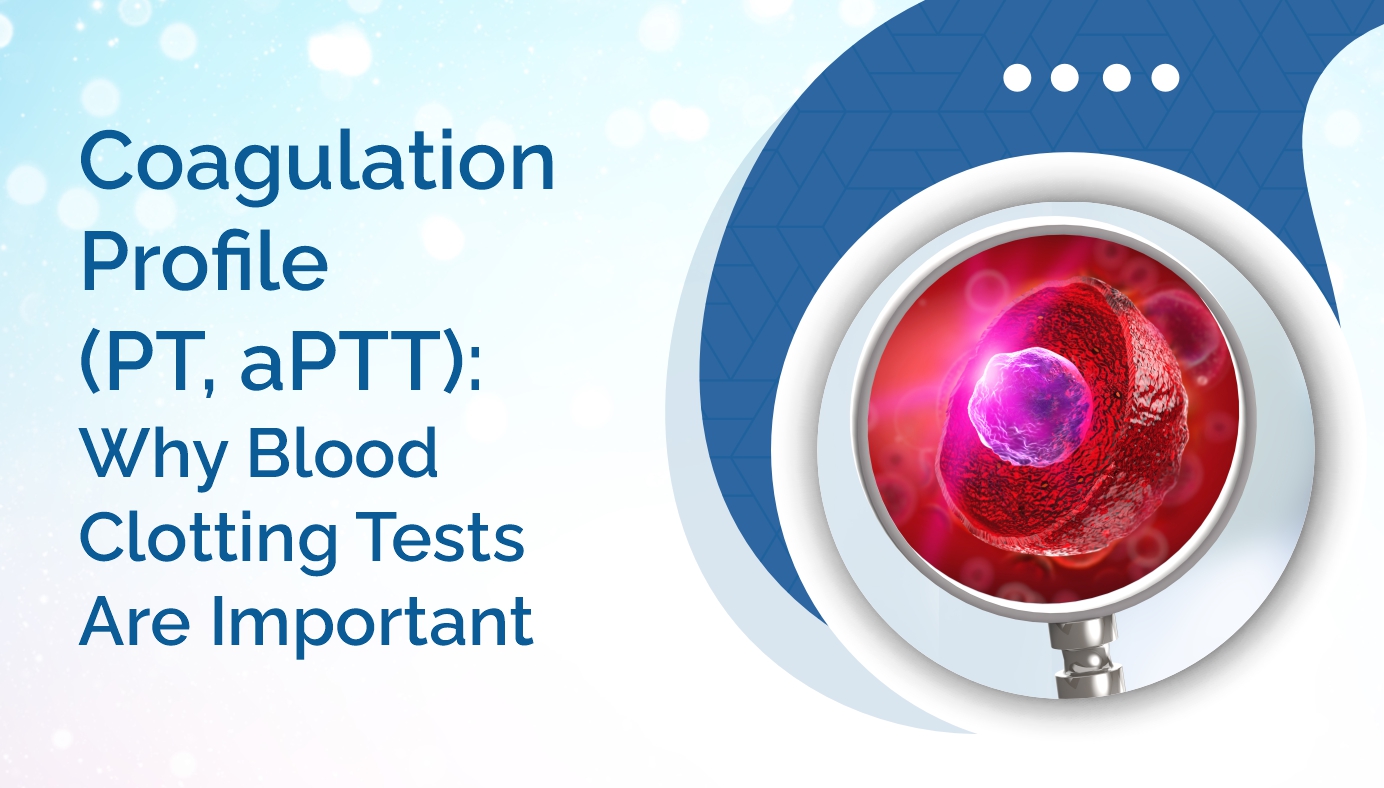


Hemostasis, commonly known as blood clotting, is a sophisticated physiological process that protects the body from excessive blood loss when a blood vessel is injured. This system depends on a delicate balance. If blood clots too easily, it can block blood vessels and cause life-threatening conditions such as stroke or pulmonary embolism. If clotting is inefficient, even minor injuries can result in prolonged or uncontrolled bleeding.
To assess how effectively this system works, healthcare providers use a group of diagnostic tests called a coagulation profile. This profile mainly includes the Prothrombin Time (PT) and Activated Partial Thromboplastin Time (aPTT) tests. These tests help evaluate how accurately and quickly the blood forms clots.
Blood clotting occurs through the action of proteins known as clotting factors. These factors circulate in the bloodstream in an inactive form. When a blood vessel is damaged, a process called the coagulation cascade is triggered. This involves a step-by-step activation of clotting factors, ultimately leading to the formation of a fibrin clot that seals the wound.
The coagulation cascade works through two primary pathways: the extrinsic pathway and the intrinsic pathway. Both pathways eventually converge into a common pathway to complete clot formation. PT and aPTT tests assess these pathways separately, allowing doctors to identify where a clotting abnormality may exist.
A standard coagulation profile focuses on two key measurements: Prothrombin Time and Activated Partial Thromboplastin Time. Although both measure how long blood takes to clot, they evaluate different components of the clotting system.
The Prothrombin Time test measures the extrinsic pathway of coagulation and evaluates clotting factors I, II, V, VII, and X. This pathway is typically activated by external injury that causes blood to escape from the blood vessels.
Because PT results can vary between laboratories due to different testing reagents, the International Normalized Ratio (INR) is used. INR standardizes PT results so they can be interpreted consistently regardless of where the test is performed.
The Activated Partial Thromboplastin Time test evaluates the intrinsic and common pathways of coagulation. It measures clotting factors I, II, V, VIII, IX, X, XI, and XII. This pathway is usually triggered by injury within the blood vessel itself, such as damage to the vessel lining.
By analyzing both PT and aPTT results together, clinicians obtain a comprehensive overview of a patient’s clotting ability. If one test is prolonged while the other remains normal, it helps narrow down which specific clotting factors may be deficient or malfunctioning.
Doctors order coagulation profiles for several important medical reasons related to diagnosis, treatment, and patient safety.
One of the most common uses of a coagulation profile is monitoring anticoagulant therapy. Patients taking Warfarin require regular PT and INR testing because the medication affects vitamin K–dependent clotting factors. This ensures the dose is effective without increasing bleeding risk.
Patients receiving Heparin therapy are monitored using the aPTT test. This helps confirm that the medication remains within a safe and therapeutic range.
Coagulation testing is also essential before major surgical procedures. Surgery involves controlled bleeding, and an undiagnosed clotting disorder could lead to severe complications during or after the operation. A coagulation profile confirms that normal clotting can occur.
If a patient experiences frequent nosebleeds, heavy menstrual bleeding, unexplained bruising, or prolonged bleeding from small cuts, a coagulation profile is often the first diagnostic step. Abnormal results may indicate inherited conditions such as hemophilia or von Willebrand disease.
The liver produces most of the clotting factors in the body. As a result, abnormal PT or aPTT results can be an early sign of liver disease. When liver function is impaired, clotting factor production decreases, leading to prolonged clotting times.
Coagulation test results are measured in seconds. Prolonged results indicate that blood is taking longer than normal to clot.
Prolonged PT results may suggest vitamin K deficiency, liver disease, or the effect of blood-thinning medications such as Warfarin. Prolonged aPTT results may indicate hemophilia, von Willebrand disease, Heparin use, or autoimmune conditions such as lupus anticoagulant.
Shortened clotting times are less common but may indicate a hypercoagulable state, where blood clots too quickly and increases the risk of thrombosis.
The coagulation profile is performed using a standard blood draw from a vein in the arm. The blood sample is collected in a tube containing citrate, which prevents clotting before laboratory analysis.
Fasting is usually not required for this test. However, patients should inform their healthcare provider about all medications, supplements, and vitamins they are taking, as substances such as aspirin or blood thinners can affect results.
The coagulation profile is an essential diagnostic tool in modern healthcare. Whether used for monitoring medication, evaluating bleeding disorders, assessing liver function, or preparing for surgery, PT and aPTT tests provide critical information about blood clotting ability.
Early identification of clotting abnormalities allows timely treatment and reduces the risk of serious complications. If you experience abnormal bleeding or are planning a surgical procedure, discussing a coagulation profile with your healthcare provider is an important step in ensuring safe and effective care.
WANT TO BOOK HEALTH CHECKUP ?
Recent Blogs
Pregnancy Hormone Test: Understanding hCG Levels
Seeing those two pink lines or a flashing "Pregnant" on a digital display is a life-changing...
29-12-2025


Electrolyte Panel: Understanding Sodium, Potassium & Calcium Levels
An electrolyte panel is a common blood test that measures the levels of essential minerals...
29-12-2025
Coagulation Profile (PT, aPTT): Understanding Blood Clotting Tests
Hemostasis, commonly known as blood clotting, is a sophisticated physiological process that...
29-12-2025
